Quick Conversions
Alu KG Price Trend in India — Last 10 Days
All prices in ₹ per gram · daily rate, updated once per day
Today’s alu kg price and what it means in real buying terms
The alu kg price in India today comes to ₹286.81 per kg, based on a live aluminium rate of ₹0.29 per gram on September 17, 2026. That is the cleanest way to read the market if you are buying sheet, ingot, extrusion stock, or scrap substitutes by weight. Retail users often search per kg. Traders and factories still watch MCX aluminium futures and LME aluminium because that is where the benchmark direction usually shows up first.
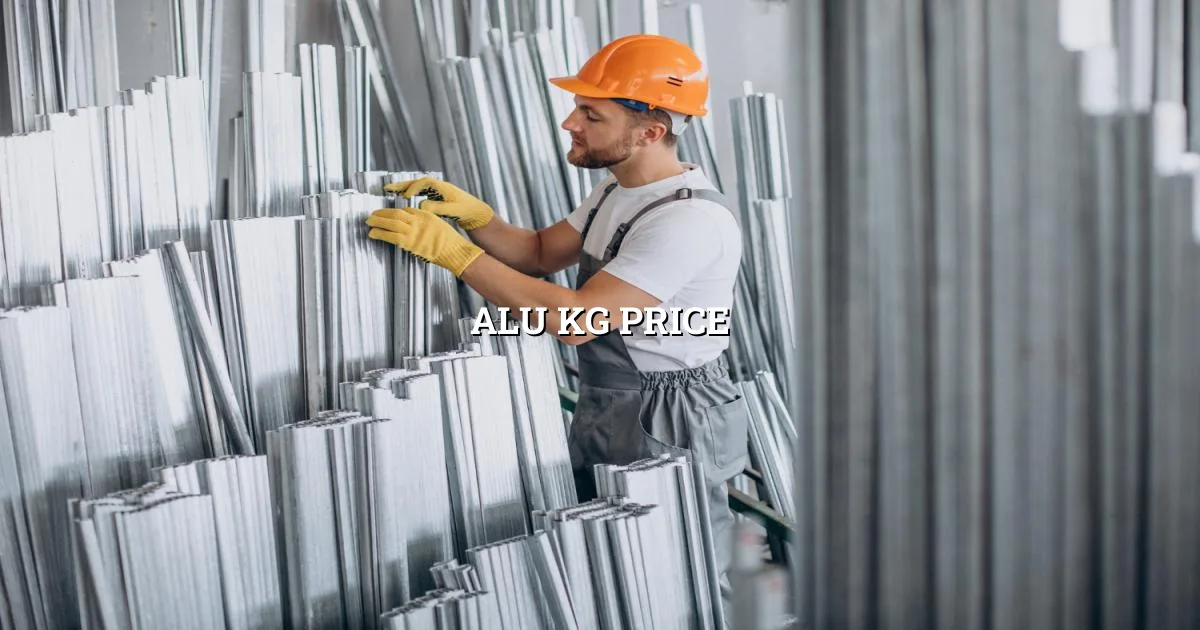
There is also a practical reason this conversion matters. Most Indian buyers do not purchase aluminium in 1-gram lots, obviously. Fabricators in Rajkot, Coimbatore, Faridabad, and Bhiwandi usually think in kilos, bundles, and tonnes. A live per-gram feed is useful because it standardises the rate across all units, but the moment procurement starts, the discussion shifts to aluminium per kg, transport, GST input credit, and whether the material is primary or secondary.
- 1 gram: ₹0.29
- 10 grams: ₹2.87
- 100 grams: ₹28.68
- 1 kg: ₹286.81
- 1 metric tonne: ₹286,811.00
If you are comparing this with a stockist quote, keep one thing in mind: the live aluminium spot price is the base, not always the final invoice number. Service centre cutting charges, alloy premium, freight, and payment terms can move the actual aluminium ingot price, aluminium sheet price, or aluminium foil price above the raw benchmark. Still, for daily direction, MCX aluminium remains the quickest reference point most serious buyers in India watch.
Alu KG Price Converted Across Common Trading Weights
Today's Aluminium rate is Less than One Rupees per gram. At this rate, 10 grams of Aluminium costs Three Rupees.
| Unit | Weight | Price (INR) | Price in Words |
|---|---|---|---|
| 1 Gram | 1.0000 g | ₹0.29 | Less than One Rupees |
| 8 Grams | 8.0000 g | ₹2.29 | Two Rupees |
| 10 Grams | 10.0000 g | ₹2.87 | Three Rupees |
| 100 Grams | 100.0000 g | ₹28.68 | Twenty Nine Rupees |
| 1 Kilogram | 1,000.0000 g | ₹286.81 | Two Hundred and Eighty Seven Rupees |
| 1 Ounce (oz) | 28.3495 g | ₹8.13 | Eight Rupees |
| 1 Troy Ounce | 31.1035 g | ₹8.92 | Nine Rupees |
| 1 Metric Ton | 1,000,000.0000 g | ₹286,811.00 | Two Lakh Eighty Six Thousand Eight Hundred and Eleven Rupees |
Why the alu kg price in India rarely moves on local demand alone
The Indian aluminium rate may look domestic on the screen, but the pricing chain is global from the start. LME grade A aluminium sets the international benchmark. MCX aluminium translates that global signal into rupees. Then the market adds the real-world Indian layers: USD/INR movement, import economics, warehouse premiums, and taxes. So yes, the alu kg price you track locally can shift even on a day when your city market feels quiet.
Benchmark price, duty structure and the India landed cost equation
For imported primary aluminium, buyers broadly track the LME aluminium benchmark and then work forward into rupees. Basic customs duty around 7.5% matters. GST matters too. So does the dollar. A weaker rupee can lift the domestic aluminium bhav even if the overseas metal price is flat. That is why procurement teams in cable, packaging, and extrusion units do not just stare at one number. They track the full chain.
Power cost is another big piece, and it gets underestimated. Aluminium smelting is energy-intensive, brutally so. If power or coal-linked costs rise, smelter margins tighten and supply behaviour changes. China, which accounts for roughly 60% of global primary aluminium output, can alter sentiment very quickly. Any signal on Chinese smelter restarts, curbs, or output expansion often ripples into LME aluminium first and then into MCX aluminium not long after.
Primary aluminium, secondary aluminium and alloy premiums
Buying primary aluminium ingot costs more than buying recycled secondary metal. That gap exists for a reason. Purity, chemistry control, and performance consistency matter. If you are making electrical conductors, foil stock, or precision extrusions, a cheap substitute can become an expensive mistake. Primary metal aligns more closely with exchange-traded standards. Secondary aluminium, or scrap-based material, can be attractive for castings and less demanding applications, but the aluminium scrap price often reflects contamination risk and sorting quality.
Alloys complicate the picture further. Commercially pure 1100 series material, structural 6061, marine-grade variants, foundry alloys, and rolled can-sheet feedstock do not trade with identical premiums. The live aluminium per kg figure gives you the base. The alloy, temper, and finish decide the final quote. In construction, window and facade fabricators may pay one premium. In automotive lightweighting or EV panel work, they may pay another. That difference is normal. It is not a pricing error.
Demand is broadening too. Food packaging has pushed aluminium foil consumption higher. The National Infrastructure Pipeline continues to support use in transport, power, urban construction, and industrial systems. None of this guarantees a straight-line rally. It does mean aluminium has real consumption under it, not just speculative trading volume.
Alu KG Price History — Recent Daily Levels
The most recent Aluminium price on record (2026-09-17) is Less than One Rupees per gram.
| Date | Price (INR/g) | Change |
|---|---|---|
| 2026-09-17 | ₹0.29 | +0.00 |
| 2026-09-16 | ₹0.29 | +0.00 |
| 2026-09-15 | ₹0.28 | +0.00 |
| 2026-09-14 | ₹0.28 | 0.00 |
| 2026-09-13 | ₹0.28 | +0.00 |
| 2026-09-12 | ₹0.28 | 0.00 |
| 2026-09-11 | ₹0.28 | 0.00 |
| 2026-09-10 | ₹0.29 | 0.00 |
| 2026-09-09 | ₹0.29 | +0.00 |
| 2026-09-08 | ₹0.29 | — |
Tracking aluminium over time: what traders, buyers and investors should actually watch
Aluminium is a cyclical metal. That one fact explains a lot. It does well when industrial activity is firm, construction is moving, packaging demand is healthy, and manufacturing confidence holds up. It weakens when global growth slows, inventories build, or the market starts expecting softer factory demand. So if you are using this page for more than a one-off price check, focus less on a single daily print and more on the pattern building underneath it.
Start with the relationship between LME aluminium and MCX aluminium futures. LME gives the global cue. MCX gives the tradable Indian benchmark. If both move in the same direction and the rupee is stable, price discovery is usually straightforward. If LME is flat but USD/INR jumps, the Indian aluminium rate can still move sharply. That is where many smaller buyers get caught off guard. They watch only domestic spot chatter and miss the currency effect completely.
Seasonality matters as well, even if it does not dominate every year. Pre-summer construction activity can support aluminium demand through extrusions, roofing, facade work, and conductors. Festive-season packaging demand tends to help foil and container consumption. Monsoon months often slow some building activity, which can soften near-term offtake in certain segments. This is not a rigid rulebook. It is more of a market habit, and habits matter in commodities.
For industrial procurement, the better approach is staggered buying. If your plant consumes aluminium regularly, avoid locking the full monthly requirement at one emotional high unless you have a hedge in place. Many experienced buyers use MCX aluminium futures as a reference for hedging or timing purchases, especially when they see a quick spike driven by overseas headlines rather than physical shortage. The point is not to outsmart every move. It is to reduce nasty surprises in landed cost.
Retail investors should keep expectations realistic. Aluminium does not have the same wide retail product ecosystem in India that gold and silver enjoy. There are no sovereign bond-style instruments tied to aluminium, and there is no mainstream digital aluminium SIP culture. Exposure, where available, usually comes through commodity-oriented products, base-metal linked funds, or direct futures participation for those who understand margin risk. That is a different game from buying jewellery metal. It is closer to industrial macro trading.
India’s own supply story is worth watching over the longer run. Major domestic producers such as Hindalco and Vedanta give the market some local depth, which helps compared with a fully import-dependent setup. Even so, the country does not trade in isolation. Global surplus or tightness still finds its way here. Smelter economics, bauxite and alumina trends, freight, and international warehouse stocks all feed back into the price. That is why the alu kg price is best treated as a live industrial signal, not just a number on a table.
If you are buying for fabrication, monitor the benchmark and the premium separately. If you are trading, track MCX aluminium futures against the 10-day and 30-day pattern rather than reacting to every intraday wobble. And if you are simply trying to judge whether current aluminium bhav is expensive or reasonable, compare today’s 1 kg and tonne values with recent history on this page. Context usually tells the real story.
Alu KG Price FAQs for Buyers and Traders
The alu kg price in India today works out to ₹286.81 per kg, based on the live aluminium price of ₹0.29 per gram on September 17, 2026.
Multiply the live per gram aluminium rate by 1,000. At today's rate of ₹0.29 per gram, 1 kg aluminium comes to ₹286.81.
MCX aluminium futures are one of the main price references in India. Domestic aluminium rates usually track MCX aluminium, which in turn follows LME aluminium, USD/INR moves, and local tax and duty effects.
Primary aluminium is priced against LME grade A aluminium and offers higher purity. Aluminium scrap price or secondary aluminium usually trades lower because alloy mix, contamination, and recovery losses affect resale value.
At today's live aluminium price of ₹0.29 per gram, 1 metric tonne works out to ₹286,811.00. Large industrial buyers still negotiate freight, conversion, and grade premiums separately.
Because aluminium is a globally traded industrial metal. A move in LME aluminium, a sharp USD/INR change, Chinese smelter output, or power-cost pressure can shift the Indian aluminium rate even before domestic spot demand visibly changes.
