Quick Conversions
Aluminium Cost Per Ton — 10-Day Price Trend
All prices in ₹ per gram · daily rate, updated once per day
Aluminium Cost Per Ton in India Today
The aluminium cost per ton in India stands at ₹0.29 on September 17, 2026. That number matters more than most buyers realise, because the market for aluminium sheet, aluminium ingot, foil stock, and extrusion billets often starts with the tonnage benchmark before any fabrication premium gets added. MCX aluminium futures and LME aluminium still set the tone.
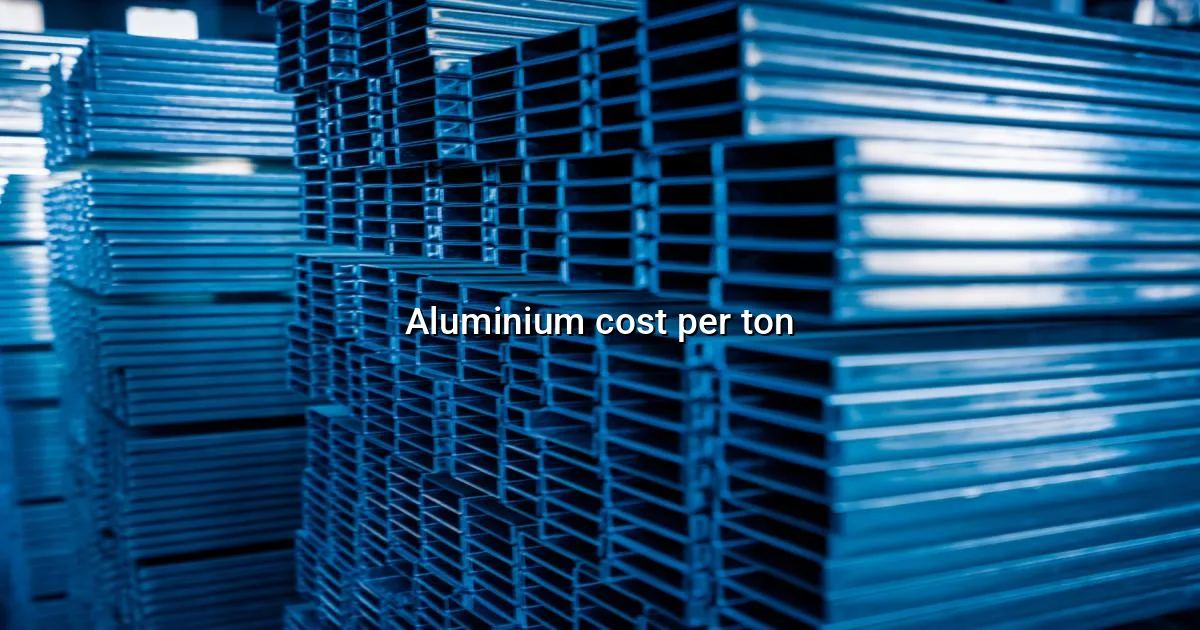
What the ton price means in real buying
Industrial buyers rarely think in grams. A fabricator ordering coils or a trader lifting a full truckload wants the number in tonnes, because that is how procurement teams compare quotes, lock margins, and check whether the market is moving against their stock. A small shift in aluminium price today India can become a large bill once you multiply it across several tonnes.
- 1 gram: ₹0.29
- 10 grams: ₹2.86
- 100 grams: ₹28.58
- 1 kg: ₹285.79
- 1 metric tonne: ₹285,787.00
That tonne figure also gives you a cleaner read on the trade. LME aluminium is quoted in dollars per tonne, so the Indian spot price only makes sense once you convert it back through the rupee and compare it with MCX aluminium. The spread between those two often tells you whether imports are still competitive.
Aluminium Cost Per Ton Broken Into Common Units
Today's Aluminium rate is Less than One Rupees per gram. At this rate, 10 grams of Aluminium costs Three Rupees.
| Unit | Weight | Price (INR) | Price in Words |
|---|---|---|---|
| 1 Gram | 1.0000 g | ₹0.29 | Less than One Rupees |
| 8 Grams | 8.0000 g | ₹2.29 | Two Rupees |
| 10 Grams | 10.0000 g | ₹2.86 | Three Rupees |
| 100 Grams | 100.0000 g | ₹28.58 | Twenty Nine Rupees |
| 1 Kilogram | 1,000.0000 g | ₹285.79 | Two Hundred and Eighty Six Rupees |
| 1 Ounce (oz) | 28.3495 g | ₹8.10 | Eight Rupees |
| 1 Troy Ounce | 31.1035 g | ₹8.89 | Nine Rupees |
| 1 Metric Ton | 1,000,000.0000 g | ₹285,787.00 | Two Lakh Eighty Five Thousand Seven Hundred and Eighty Seven Rupees |
Why Aluminium Cost Per Ton Moves the Way It Does
Indian aluminium pricing does not move in a vacuum. The benchmark comes from LME grade A aluminium, then the domestic market layers on currency conversion, import duty, freight, and local availability. In practice, that means a turn in the USD/INR rate or a jump in ocean freight can change the aluminium cost per ton even if the underlying London price barely moves.
Primary metal, scrap, and alloy premiums
Primary aluminium is the clean benchmark. It meets the purity standard used by the exchange market and usually sits above secondary metal, which is made from recycled scrap and can vary a lot in quality. That gap is why aluminium scrap price, aluminium alloy price, and primary aluminium price never line up perfectly. A recycled alloy batch can trade cheaper, but that does not help a cable maker who needs consistent conductivity or a sheet processor who wants predictable rolling behaviour.
Import duty matters too, and Indian buyers keep an eye on that number because it feeds directly into landed cost. Basic customs duty around 7.5% is often part of the conversation, with GST on top, so the finished ton price in the local market ends up higher than the raw LME number. That is one reason aluminium price per kg in India can feel sticky on the way down and quick on the way up.
Demand-side signals matter as well. Packaging runs stronger when foil and can makers build inventory, construction pulls harder when window-frame and façade work picks up, and automotive lightweighting keeps alloy demand alive. China still dominates global primary aluminium output, so any change in smelter economics, coal prices, or power tariffs can spill straight into Indian pricing. It is a blunt market, really. Energy costs move, and the ton price reacts.
Aluminium Cost Per Ton — Last 10 Days
The most recent Aluminium price on record (2026-09-17) is Less than One Rupees per gram.
| Date | Price (INR/g) | Change |
|---|---|---|
| 2026-09-17 | ₹0.29 | +0.00 |
| 2026-09-16 | ₹0.29 | +0.00 |
| 2026-09-15 | ₹0.28 | +0.00 |
| 2026-09-14 | ₹0.28 | 0.00 |
| 2026-09-13 | ₹0.28 | +0.00 |
| 2026-09-12 | ₹0.28 | 0.00 |
| 2026-09-11 | ₹0.28 | 0.00 |
| 2026-09-10 | ₹0.29 | 0.00 |
| 2026-09-09 | ₹0.29 | +0.00 |
| 2026-09-08 | ₹0.29 | — |
What Buyers and Traders Watch Next
Aluminium behaves like a cyclical industrial commodity, not a passive store of value. That is the first thing to remember if you are tracking aluminium cost per ton for procurement or trading. The price can sit quiet for days, then jump when macro data, Chinese output, or a sharp move in the dollar changes the path of least resistance. MCX aluminium futures are where that pressure usually shows up first for Indian participants.
For a domestic buyer, the more useful comparison is often between the current ton price and the recent range. If the market is near a 52-week high, purchasing decisions become more cautious. If it is closer to the lower end, fabricators may hedge a bit less and rebuild stock. That is normal. Nobody wants to chase a metal that adds a few thousand rupees per tonne before lunch.
Seasonality adds another layer. Construction demand often improves before summer work picks up, while monsoon months can slow site activity and keep some buyers on the sidelines. Festive-season packaging demand can also tighten the market, especially where foil and can production runs get booked early. On the supply side, India is still balancing domestic smelting growth from names like Hindalco and Vedanta against import dependence, so the market never feels fully insulated from London.
There is no sovereign bond-style shortcut for aluminium in India, and that is part of the point. Retail buyers do not get the same product stack that gold or silver enjoy. If you want exposure, you watch MCX aluminium, follow LME aluminium, and use commodity mutual funds or industrial procurement decisions where they fit. For everyone else, the headline number — the aluminium cost per ton — remains the cleanest way to judge whether the market is cheap, expensive, or simply waiting for the next move.
Aluminium Cost Per Ton — Questions Buyers Ask
The aluminium cost per ton in India today is ₹0.29 as of September 17, 2026. That is the live reference price on MetalsCost, built from the latest aluminium market data and updated to reflect the current INR rate.
Multiply the aluminium price per kg by 1,000. If the live rate is ₹0.29 per kg, the aluminium cost per ton works out to ₹285.79. Traders usually talk in tonnes because MCX aluminium and LME aluminium both reference large industrial volumes.
Because LME grade A aluminium is the global benchmark for primary aluminium. Indian prices generally move with LME aluminium in USD per tonne, then get converted into INR and adjusted for duty, freight, and local market sentiment. MCX aluminium futures reflect that flow very quickly.
No. Primary aluminium usually prices off LME grade A metal and carries a higher purity standard. Secondary aluminium or scrap often trades at a discount because composition, contamination, and remelting cost all matter. An aluminium scrap price can sit well below the primary aluminium ingot price.
The big drivers are LME aluminium, USD/INR, import duty, freight, and power costs. Aluminium smelting is energy-intensive, so Chinese output, coal prices, and global supply disruptions can push the market around fast. MCX aluminium futures usually absorb those signals first.
One tonne of aluminium is worth ₹285.79 at today's reference rate. Fabricators buying in bulk often compare the ton price with aluminium sheet price, aluminium ingot price, and alloy premiums before placing orders.
