Quick Conversions
Aluminium Scrap Price Per Kg — 10-Day Market Trend
All prices in ₹ per gram · daily rate, updated once per day
What the aluminium scrap price per kg means in today’s market
The benchmark aluminium scrap price per kg, based on today’s live aluminium rate, stands at ₹285.79 on September 17, 2026. That figure gives buyers, fabricators and scrap traders a clean starting point. It is not the final yard quote in every mandi or industrial cluster, but it tells you where the broader market is sitting because Indian aluminium pricing still takes its cue from MCX aluminium futures and the international LME aluminium benchmark.
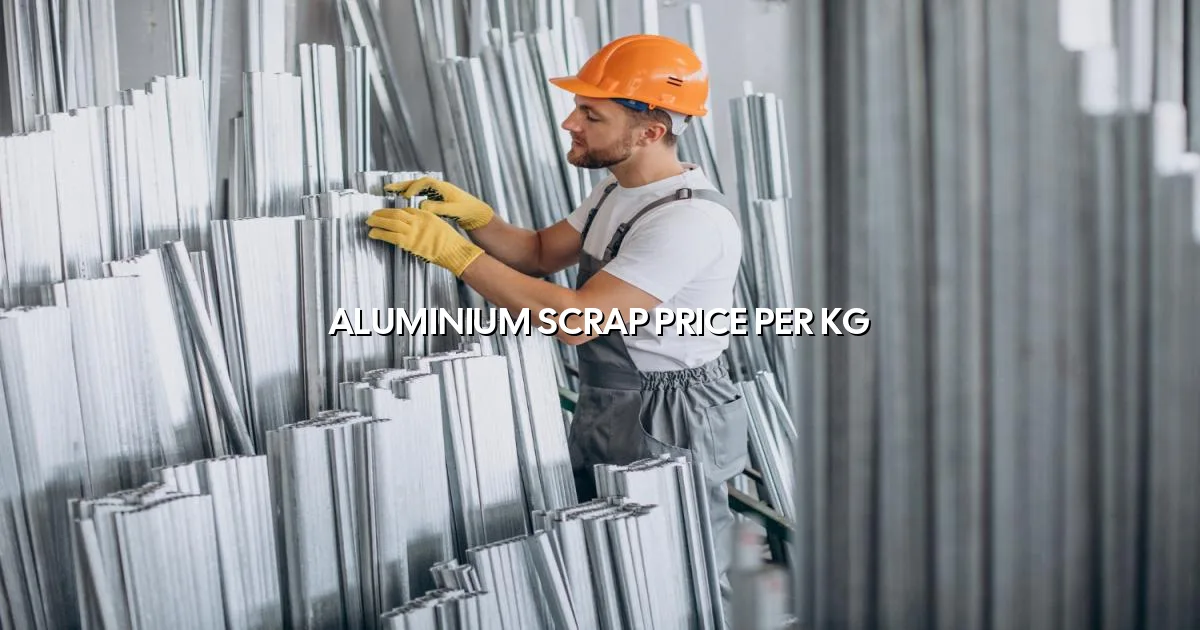
Scrap buyers rarely negotiate from a blank sheet. They look at the live aluminium rate, then adjust for scrap grade, dirt, paint, moisture, attachments and melting recovery. Clean extrusion offcuts can trade close to the primary aluminium reference. Mixed turnings or contaminated cast scrap usually trade well below it. That difference matters a lot if you are buying by the truckload rather than by a few kilos.
Live benchmark conversion from today’s aluminium rate
- 1 gram: ₹0.29
- 10 grams: ₹2.86
- 100 grams: ₹28.58
- 1 kg: ₹285.79
- 1 metric tonne: ₹285,787.00
For anyone tracking aluminium bhav on mobile before making a deal, this benchmark helps separate noise from the real trend. If MCX aluminium moves sharply overnight because LME aluminium rose on tighter supply or a weaker rupee, scrap quotes in Indian yards usually catch up quickly. Sometimes the adjustment is immediate. Sometimes local dealers wait for confirmation from furnace demand before moving their bid.
Aluminium Scrap Price Per Kg and Other Weights
Today's Aluminium rate is Less than One Rupees per gram. At this rate, 10 grams of Aluminium costs Three Rupees.
| Unit | Weight | Price (INR) | Price in Words |
|---|---|---|---|
| 1 Gram | 1.0000 g | ₹0.29 | Less than One Rupees |
| 8 Grams | 8.0000 g | ₹2.29 | Two Rupees |
| 10 Grams | 10.0000 g | ₹2.86 | Three Rupees |
| 100 Grams | 100.0000 g | ₹28.58 | Twenty Nine Rupees |
| 1 Kilogram | 1,000.0000 g | ₹285.79 | Two Hundred and Eighty Six Rupees |
| 1 Ounce (oz) | 28.3495 g | ₹8.10 | Eight Rupees |
| 1 Troy Ounce | 31.1035 g | ₹8.89 | Nine Rupees |
| 1 Metric Ton | 1,000,000.0000 g | ₹285,787.00 | Two Lakh Eighty Five Thousand Seven Hundred and Eighty Seven Rupees |
Why scrap aluminium per kg trades below primary metal
Primary aluminium and secondary aluminium do not behave the same way, even when they move in the same direction. The exchange-traded benchmark reflects refined metal quality. Scrap reflects usable metal after sorting, cleaning and melting. That one distinction explains most of the gap that buyers see between a published aluminium rate and an actual aluminium scrap price per kg quoted by recyclers, stockists and local yards.
How MCX and LME feed into the local scrap market
MCX aluminium contracts take their pricing signal from LME grade A aluminium, then the Indian market layers in USD/INR movement, logistics and domestic tax costs. Import economics also matter. Primary aluminium pricing in India reflects basic customs duty of roughly 7.5% plus GST, so even if the global benchmark looks stable in dollar terms, the landed rupee cost can shift meaningfully. Scrap dealers keep a close eye on that spread because recycled metal competes directly with primary ingot in many downstream applications.
There is a practical side to this. A die-casting unit buying clean wheel scrap, or an extrusion plant buying segregated profile scrap, compares the recoverable metal value against the price of primary aluminium ingot. If primary aluminium gets too expensive, secondary aluminium becomes more attractive. If scrap supply dries up, the discount narrows. The market is blunt like that.
Grade, alloy and contamination decide the final quote
Not all scrap is equal, and anyone active in the trade knows it. Clean 6063 extrusion scrap, tense scrap, litho sheet and bare sheet cutting usually command better prices because the chemistry is easier to control and the melt loss is lower. Mixed scrap from demolition, painted window frames, composite material with rubber or steel attachments, foil waste and oily borings fetch less. A buyer is not paying only for gross kilograms; they are paying for the kilograms that actually survive the furnace.
Alloy specification adds another layer. A fabricator sourcing material for rerolling or extrusion may need tighter chemistry than a remelter making lower-grade cast products. That is why 1100-series sheet scrap, 6061 and 6063 profile scrap, and cast alloy scrap can each carry different yard rates even on the same day. BIS product requirements and customer quality checks force buyers to be picky. Cheap mixed scrap can become expensive very quickly if the melt chemistry goes wrong.
Energy cost also keeps showing up in the final number. Aluminium smelting is power-intensive, but recycling still needs furnace fuel, labour and handling. When coal, gas or industrial electricity costs climb, processors try to recover part of that through tighter scrap buying spreads. China matters here too. Chinese smelters account for around 60% of global primary aluminium output, so any disruption in Chinese production, power curbs or export flows can move LME aluminium and, by extension, change the ceiling that Indian scrap buyers are willing to pay.
Aluminium Scrap Price Per Kg — Last 10 Days
The most recent Aluminium price on record (2026-09-17) is Less than One Rupees per gram.
| Date | Price (INR/g) | Change |
|---|---|---|
| 2026-09-17 | ₹0.29 | +0.00 |
| 2026-09-16 | ₹0.29 | +0.00 |
| 2026-09-15 | ₹0.28 | +0.00 |
| 2026-09-14 | ₹0.28 | 0.00 |
| 2026-09-13 | ₹0.28 | +0.00 |
| 2026-09-12 | ₹0.28 | 0.00 |
| 2026-09-11 | ₹0.28 | 0.00 |
| 2026-09-10 | ₹0.29 | 0.00 |
| 2026-09-09 | ₹0.29 | +0.00 |
| 2026-09-08 | ₹0.29 | — |
How traders and industrial buyers should read aluminium scrap price trends
Aluminium is a cyclical industrial commodity. Scrap follows that cycle, but with its own lag, premiums and discounts. If you only watch one day’s yard rate, you miss the bigger picture. Better to track the benchmark aluminium price, the direction of MCX aluminium futures, the LME aluminium curve, the rupee and the pattern in physical demand. Put those together and the market starts to make sense.
For Indian buyers, the first question is simple: is this a global move or a local one? A sharp overnight rise in LME aluminium because of supply worries, sanctions chatter or stronger manufacturing data usually pulls MCX higher at the open. That gives scrap sellers more confidence. On the other hand, if MCX is flat but local scrap demand improves because rerollers and small foundries are actively buying, the aluminium scrap price per kg can firm up even without a dramatic international trigger.
Seasonality plays its part too. Construction-linked demand often improves before the monsoon slowdown, especially in markets tied to window frames, facades, roofing sheets and extrusion profiles. Packaging demand picks up around festive periods, and aluminium foil consumption in food and pharma remains structurally strong. Automotive demand has become more relevant as lightweighting and EV component demand grow, though that effect shows up more clearly in specific alloy segments than in mixed scrap.
Procurement teams should also watch the spread between primary aluminium and secondary aluminium rather than focusing only on the absolute price. If the spread narrows sharply, scrap may no longer deliver the cost advantage expected by small manufacturers. If the spread widens, buyers willing to sort and test properly can lock in attractive raw material economics. This is where disciplined grade segregation pays off. Buying a cheaper mixed lot without checking attachments, moisture and alloy type often destroys the saving on paper.
There is no retail-friendly aluminium savings product in India comparable to sovereign gold bonds or digital gold. So if someone wants market exposure, the real route is through commodity trading products, base-metal-oriented funds where available, or direct business procurement decisions. For traders, MCX aluminium futures remain the main price-discovery tool. For recyclers and fabricators, the more useful move is to build a habit of comparing yard quotes against the benchmark on a daily basis.
India’s longer-term demand story still supports the metal. Hindalco and Vedanta have significant domestic presence, but the market remains sensitive to import parity, logistics costs and downstream demand from infrastructure, transport and packaging. The National Infrastructure Pipeline, urban housing, transmission lines and transport equipment all point to sustained aluminium use over time. Scrap will benefit from that trend because every growing aluminium economy eventually creates a larger recycling loop. That does not mean prices go only one way. It means the trade stays active, and informed buyers usually get the better end of the deal.
If you are comparing today’s number with the recent 10-day range on this page, pay attention to the speed of change as much as the size of change. Fast moves usually come from exchange-led price discovery. Slower moves often come from the physical market adjusting. Knowing the difference helps whether you are a scrap dealer in Morbi, a cable maker in Delhi NCR or a fabrication workshop in Coimbatore buying every week.
Aluminium Scrap Price Per Kg — FAQ for Buyers and Traders
The benchmark aluminium price on this page works out to ₹285.79 per kg as of September 17, 2026, based on a live per-gram value of ₹0.29. Actual aluminium scrap price per kg in local yards can trade below this benchmark depending on grade, paint, oil content, alloy mix and recovery losses.
MCX aluminium futures track exchange-traded primary aluminium linked to LME grade A aluminium, currency movement and domestic cost factors. Scrap is a secondary aluminium market. Dealers discount the rate for contamination, alloy uncertainty, sorting cost and melting loss, so scrap usually does not match the exchange benchmark one-for-one.
At today\'s benchmark value, 1 metric tonne of aluminium equals ₹285,787.00. In real procurement, aluminium scrap price per kg for one-tonne lots depends heavily on whether the material is extrusion scrap, tense scrap, wheel scrap, foil scrap or mixed cast scrap.
Clean segregated grades usually fetch the strongest rates. Bare extrusion scrap, clean sheet offcuts and alloy-specific segregated scrap tend to command a premium over mixed, painted, oily or heavily contaminated material. Buyers pay for metal yield, not just gross weight.
Yes, indirectly. Indian aluminium pricing reacts to LME aluminium, USD/INR and import costs. Primary aluminium imports are influenced by basic customs duty of around 7.5% plus GST. Scrap pricing then adjusts around that benchmark after accounting for local supply, furnace demand and recycling economics.
No. Local aluminium bhav can differ across Delhi, Ahmedabad, Mumbai, Chennai, Hyderabad or Coimbatore because freight, scrap availability, smelter demand, labour cost and grade mix vary by market. Large industrial clusters often quote tighter spreads than smaller local scrap yards.
