Quick Conversions
Copper 1kg Rate Trend — Last 10 Days
All prices in ₹ per gram · daily rate, updated once per day
Copper 1kg Rate Today in India
The copper 1kg rate in India stands at ₹1,231.19 on September 14, 2026. For a buyer in Delhi, Rajkot, Coimbatore or Nagpur, that number matters more than the per-gram quote because actual transactions in the physical market usually happen in kilos, bundles, rods and coils. The retail and semi-wholesale market still tracks the same benchmark though: MCX copper futures at home and LME copper overseas set the tone, then local stockist margin, freight and billing structure do the rest.
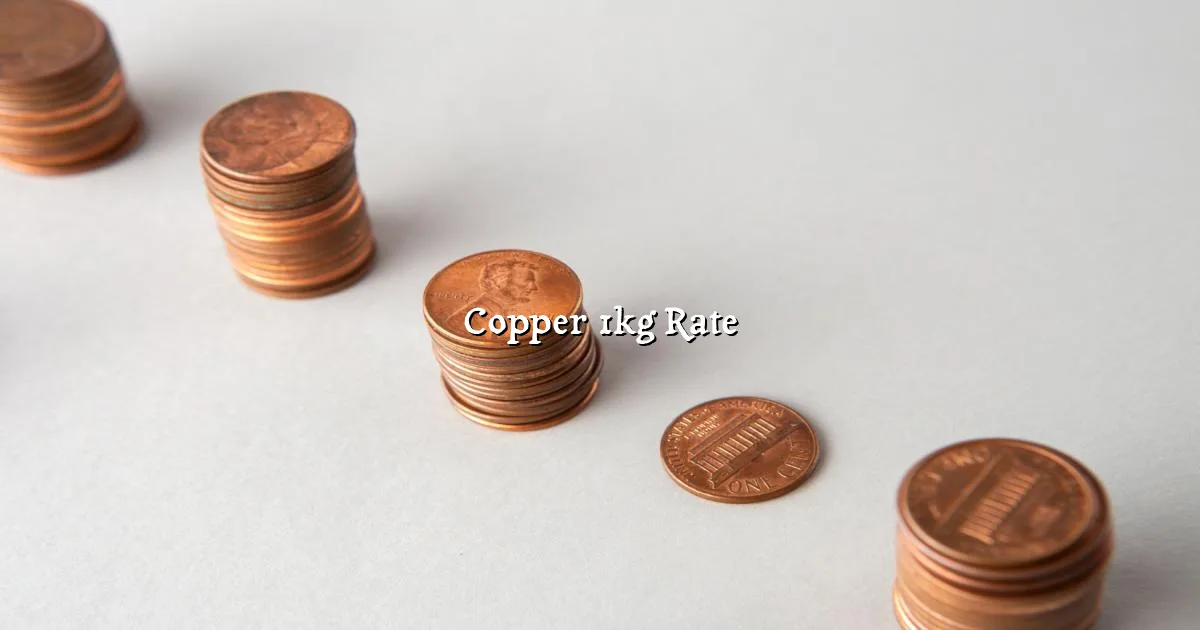
If you are checking tamba rate before buying copper wire, busbar, strips or pipe, the useful starting point is the live conversion. Today\'s copper price per gram is ₹1.23, which means the market value for 1 kg sits at the kilo figure shown above. Sounds simple. In practice, traders also watch whether MCX is trading at a premium or discount to import parity, especially when LME copper moves sharply overnight or the rupee weakens against the dollar.
- 1 gram: ₹1.23
- 10 grams: ₹12.31
- 100 grams: ₹123.12
- 1 kg: ₹1,231.19
- 1 metric tonne: ₹1,231,185.00
That tonne number is not academic. Large cable makers, enamelled wire plants and copper rod buyers think in tonnes, and the 1kg rate is really just a convenient bridge between exchange pricing and shop-floor buying. If LME copper rallies by a few hundred dollars per tonne, the change filters straight into the domestic copper 1kg rate. Sometimes within hours.
Copper 1kg Rate and Other Weight Conversions
Today's Copper rate is One Rupees per gram. At this rate, 10 grams of Copper costs Twelve Rupees.
| Unit | Weight | Price (INR) | Price in Words |
|---|---|---|---|
| 1 Gram | 1.0000 g | ₹1.23 | One Rupees |
| 8 Grams | 8.0000 g | ₹9.85 | Ten Rupees |
| 10 Grams | 10.0000 g | ₹12.31 | Twelve Rupees |
| 100 Grams | 100.0000 g | ₹123.12 | One Hundred and Twenty Three Rupees |
| 1 Kilogram | 1,000.0000 g | ₹1,231.19 | One Thousand Two Hundred and Thirty One Rupees |
| 1 Ounce (oz) | 28.3495 g | ₹34.90 | Thirty Five Rupees |
| 1 Troy Ounce | 31.1035 g | ₹38.29 | Thirty Eight Rupees |
| 1 Metric Ton | 1,000,000.0000 g | ₹1,231,185.00 | Twelve Lakh Thirty One Thousand One Hundred and Eighty Five Rupees |
Why the Copper 1kg Rate Moves in the Indian Market
The domestic kilo rate is not decided in isolation. It comes from a chain: LME copper in dollars, USD/INR conversion, import costs, and then MCX copper as the tradable Indian benchmark. Add roughly 5% basic customs duty on imports and GST in the transaction flow, and the price a factory or contractor sees on an invoice starts to make sense. Strip all that away and you miss the real market.

MCX, LME and the rupee all matter
LME copper is the global base metal reference. Indian traders wake up to that signal first, then look at where the rupee opens. A stronger dollar can lift the copper 1kg rate in India even if international copper is flat. The reverse happens too, though less often during tight global supply periods. Anyone buying electrolytic copper, copper cathode, or copper rod price-linked material should keep one eye on MCX copper and the other on USD/INR. That is how experienced stockists quote. Not by guesswork.
Demand does the heavy lifting after that. China still dominates copper consumption, so weak factory data there can drag LME prices lower. Closer home, India\'s infrastructure capex pushes the other way. More power grid expansion, metro projects, renewable installations and industrial wiring work mean better offtake for copper wire, tubing and conductor material. Solar panel installations and EV-related electrical demand have become especially relevant over the last few years; they do not move the market every day, but they keep the floor firmer than many casual buyers realise.
Refined copper, ETP copper and scrap are not priced the same
Buyers often compare refined copper with scrap and assume the cheaper quote is the better deal. Not always. ETP copper, short for Electrolytic Tough Pitch copper, is the standard electrical-grade material used across wiring and conductor applications. BIS-linked quality expectations and conductivity requirements matter here. Scrap may cost less per kg than copper cathode-derived material, but after segregation loss, melting cost, impurity discount and recovery difference, the gap narrows fast.
That is why the copper scrap price and the refined copper 1kg rate should never be treated as identical. Fabricators making lugs, strips, earthing components or low-spec cast parts may use more scrap. Cable and electrical manufacturers generally cannot take that risk. One number on a price list, two very different buying decisions.
Copper 1kg Rate History — Daily Closing Levels
The most recent Copper price on record (2026-09-14) is One Rupees per gram. This is down by Less than One Rupees from the previous day's rate of ₹1.25.
| Date | Price (INR/g) | Change |
|---|---|---|
| 2026-09-14 | ₹1.23 | -0.02 |
| 2026-09-13 | ₹1.25 | 0.00 |
| 2026-09-12 | ₹1.25 | +0.00 |
| 2026-09-11 | ₹1.25 | +0.00 |
| 2026-09-10 | ₹1.25 | -0.05 |
| 2026-09-09 | ₹1.30 | +0.00 |
| 2026-09-08 | ₹1.30 | +0.03 |
| 2026-09-07 | ₹1.27 | +0.01 |
| 2026-09-06 | ₹1.26 | +0.00 |
| 2026-09-05 | ₹1.26 | — |
How to Read the Copper 1kg Rate Beyond Today\'s Quote
A daily price is useful. A trend is more useful. Copper is a cyclical industrial metal, which means it rarely moves on sentiment alone. Manufacturing activity, construction demand, inventory levels at exchanges, mine disruption, smelter treatment charges, and currency swings all show up in the chart sooner or later. If you only look at today\'s kilo number, you miss the setup behind the move.
For Indian users, the cleanest way to track that setup is to compare MCX copper futures with LME copper spot or three-month copper. When both are rising together, the domestic copper 1kg rate usually has solid backing. When MCX is firm but LME weakens, currency or local tightness may be doing the work. That difference matters to small traders, because it affects whether a rally is likely to hold or fade once global markets reopen.
There is also a practical buying rhythm in the physical market. Before the monsoon, some contractors and stockists build inventory for wiring, roofing, infrastructure and electrical jobs. Then rains slow site activity in many regions, especially in tier-2 and tier-3 cities where project execution is more weather-sensitive. After that, festive-season electrical demand and year-end procurement can revive buying. None of these patterns guarantees a move, but seasoned copper dealers pay attention to them because they often influence short-term stock decisions.
Retail investors looking for exposure should be realistic. Copper in India is mostly a trader\'s or industrial buyer\'s market, not a passive holding product in the way gold often is. There is no sovereign-bond style alternative here. Exposure usually comes through MCX futures, some commodity-focused funds with indirect base metal participation, or by following listed companies whose margins react to copper prices. That approach carries different risks. Futures are direct but volatile; equities add company-specific noise.
The better use of a copper 1kg rate page, frankly, is decision support. If you are a fabricator, compare today\'s number with the 10-day history and check whether your supplier quote is fair. If you are a trader, watch the spread between spot-style pricing and MCX copper. If you are an electrical contractor, use the kilo rate to estimate project material cost before placing a bulk order. The rupee value per kilogram is where planning starts, even though the real market still answers to the tonne.
One last point. Copper does not behave like a defensive metal. It is tied to growth. That is exactly why analysts watch it so closely. A firm copper price today in India can reflect stronger infrastructure spending, better electrical demand, tighter concentrate supply, or simply a global risk-on move in industrial commodities. The chart gives the number. The context tells you whether it is noise or signal.
Copper 1kg Rate FAQs for Buyers and Traders
The copper 1kg rate in India today is ₹1,231.19 as of September 14, 2026. On a per gram basis, that works out to ₹1.23.
It is a straight conversion. Multiply today's copper price per gram, ₹1.23, by 1,000. That gives a current 1kg copper value of ₹1,231.19.
The domestic copper rate tracks LME copper, the USD/INR exchange rate, and MCX copper futures. Import costs, including roughly 5% basic customs duty and GST treatment in the supply chain, also influence the landed price.
No. The benchmark rate shown here reflects refined copper pricing. Copper scrap price usually trades at a discount because purity, recovery loss, sorting, and melting costs differ from ETP copper or copper cathode material.
MCX copper futures are the main domestic exchange reference for base metal traders in India. Even if a fabricator buys only 1 kg or 20 kg from a local stockist, the quote is usually aligned with MCX copper and adjusted for freight, GST billing, and supplier margin.
At today's live copper price, 10 kg is worth ₹12,311.85 and 100 kg is worth ₹123,118.50.
