Quick Conversions
LME Aluminium Price Trend — Last 10 Days
All prices in ₹ per gram · daily rate, updated once per day
What the LME aluminium price means in India today
The lme aluminium price matters because it sits at the top of the pricing chain. Indian buyers may negotiate in rupees per kg, stockists may quote an aluminium rate ex-warehouse, and MCX aluminium traders may watch intraday candles, but the global anchor still comes from LME aluminium. As of September 17, 2026, the live India-equivalent rate on this page is ₹0.29 per gram, which gives you a quick way to read the benchmark without converting tonnes, dollars and exchange rates in your head.
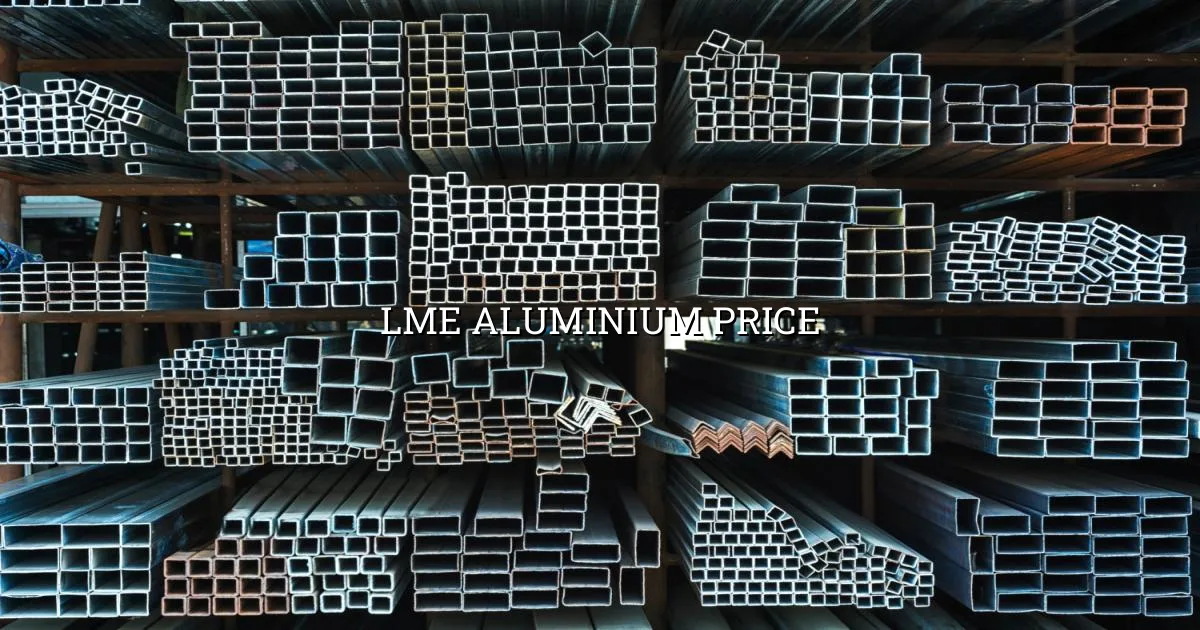
That number is most useful if you know what it represents. The LME benchmark reflects primary aluminium, typically aligned with LME grade A aluminium, and Indian market participants then map that into local landed cost, MCX aluminium futures and spot procurement decisions. A foil converter in Daman, a cable maker in Ahmedabad and a small extrusion buyer in Coimbatore may all use different purchase terms, but they are still reacting to the same underlying market signal.
Live converted aluminium values from today's benchmark
- 1 gram: ₹0.29
- 10 grams: ₹2.87
- 100 grams: ₹28.68
- 1 kg: ₹286.81
- 1 metric tonne: ₹286,811.00
For traders, the key cross-check is simple: watch the LME move overnight, watch USD/INR, then see how MCX aluminium opens. For physical buyers, the more practical question is whether the aluminium spot price is firm enough to justify booking now or waiting for a better average. Either way, the benchmark is not academic. It changes real invoice values.
LME Aluminium Price Converted Into Key Weights
Today's Aluminium rate is Less than One Rupees per gram. At this rate, 10 grams of Aluminium costs Three Rupees.
| Unit | Weight | Price (INR) | Price in Words |
|---|---|---|---|
| 1 Gram | 1.0000 g | ₹0.29 | Less than One Rupees |
| 8 Grams | 8.0000 g | ₹2.29 | Two Rupees |
| 10 Grams | 10.0000 g | ₹2.87 | Three Rupees |
| 100 Grams | 100.0000 g | ₹28.68 | Twenty Nine Rupees |
| 1 Kilogram | 1,000.0000 g | ₹286.81 | Two Hundred and Eighty Seven Rupees |
| 1 Ounce (oz) | 28.3495 g | ₹8.13 | Eight Rupees |
| 1 Troy Ounce | 31.1035 g | ₹8.92 | Nine Rupees |
| 1 Metric Ton | 1,000,000.0000 g | ₹286,811.00 | Two Lakh Eighty Six Thousand Eight Hundred and Eleven Rupees |
How the LME benchmark turns into the aluminium rate you actually pay
No one in India buys aluminium by staring at a London screen alone. The quoted LME aluminium price is the starting point, then the market adds the messy part: currency conversion, duty, tax, freight, financing cost and product-specific premiums. That is why an aluminium ingot price, aluminium sheet price or aluminium foil price can sit noticeably above the raw benchmark even when the base market looks calm.
Import costs, exchange rates and grade differences all matter
Start with the obvious one: USD/INR. A flat LME session does not guarantee a flat Indian aluminium bhav if the rupee weakens. Then comes the duty structure. For imported metal, buyers track basic customs duty of roughly 7.5% in many benchmark discussions, and GST affects the effective landed cost further down the chain. MCX aluminium futures absorb much of this logic into the domestic price discovery process, which is why hedgers keep one eye on LME and the other on the Indian contract.
Grade matters too. Primary aluminium trades differently from secondary aluminium, and that gap can be wider than many first-time buyers expect. LME-linked prices refer to primary metal purity. Recycled secondary aluminium can be cheaper, sometimes meaningfully so, but the discount depends on scrap source, contamination, alloy chemistry and recovery yield. Buying primary aluminium ingot costs more per kg than mixed secondary feedstock, but that difference matters a great deal if the metal is going into conductor, foil stock or quality-sensitive extrusion.
Why certain downstream sectors can push premiums higher
Demand is never spread evenly across the market. Food packaging can lift aluminium foil consumption. Construction demand supports windows, curtain walls, roofing sheets and facade systems. Auto lightweighting has made aluminium alloy grades like 6061 and related structural grades more relevant in value-added segments, while 1100-series and similar soft grades stay central to foil and general sheet applications. Those are fabricated-product markets, not pure exchange markets, yet they still lean on the same LME base.
There is also the China factor. China produces roughly 60% of the world's primary aluminium, so any change in Chinese smelter output, power curbs or restocking sentiment can ripple quickly into LME aluminium. Because smelting is extremely power-intensive, coal prices and electricity tariffs matter more than casual observers realise. A production cut linked to energy costs in one part of the world can show up surprisingly fast in Indian procurement quotes.
LME Aluminium Price History in India — 10 Days
The most recent Aluminium price on record (2026-09-17) is Less than One Rupees per gram.
| Date | Price (INR/g) | Change |
|---|---|---|
| 2026-09-17 | ₹0.29 | +0.00 |
| 2026-09-16 | ₹0.29 | +0.00 |
| 2026-09-15 | ₹0.28 | +0.00 |
| 2026-09-14 | ₹0.28 | 0.00 |
| 2026-09-13 | ₹0.28 | +0.00 |
| 2026-09-12 | ₹0.28 | 0.00 |
| 2026-09-11 | ₹0.28 | 0.00 |
| 2026-09-10 | ₹0.29 | 0.00 |
| 2026-09-09 | ₹0.29 | +0.00 |
| 2026-09-08 | ₹0.29 | — |
How to read the LME aluminium price beyond today's move
Aluminium is a cyclical industrial commodity. It tends to strengthen when manufacturing, construction, transport and packaging demand all pull in the same direction, and it weakens when inventories build or industrial activity cools. That is why one day's aluminium rate tells you where the market is. A few months of price action tell you what kind of market you are in.
Serious buyers usually track two things together: LME spot behaviour and MCX aluminium futures structure. If the global benchmark is rising but MCX is not fully confirming the move, traders start looking at the rupee, domestic premiums and near-term inventory conditions. If both are moving in the same direction, the price discovery signal is cleaner. This is especially useful for manufacturers planning quarterly procurement rather than hand-to-mouth buying.
Seasonality has a role, even if it is not as neat as in agricultural commodities. Construction-linked aluminium demand often improves before peak summer project execution. Monsoon can slow some site activity, which affects sections, sheets and building products. Festive-season packaging demand can support foil and can-stock consumption. None of these patterns override the LME benchmark, but they do shape how quickly global moves pass through to the Indian aluminium spot price.
Domestic supply also matters more now than it did a decade ago. India has major smelting capacity through producers such as Hindalco and Vedanta, which gives the market a stronger local base than many smaller metal-importing economies. Still, the country does not become immune to the international market because aluminium remains globally priced, and both imports and export parity keep local values tied to overseas benchmarks. In plain words: more domestic capacity helps, but the LME still sets the tone.
For investors, aluminium is a very different proposition from gold or silver. There is no sovereign bond route, no mainstream retail digital-metal format built around aluminium, and very little reason to think about the metal in grams unless you are converting the benchmark for understanding. The practical routes are MCX aluminium futures, broad commodity funds with base-metal exposure, and procurement-led inventory strategy for industrial users. Anyone trying to follow the market should also keep an eye on 52-week highs and lows, because industrial metals often overshoot in both directions before settling back toward a more workable average.
The bottom line is straightforward. If you want to judge where the Indian aluminium market may head next, start with the LME aluminium price, then layer on MCX, currency and downstream demand. That gives you a much better read than watching only a local quote in isolation.
LME Aluminium Price FAQs for India Buyers and Traders
The LME aluminium price in India today works out to ₹0.29 per gram as of September 17, 2026. On this page, that international benchmark is shown in Indian rupees so traders, fabricators and buyers can compare it with the local aluminium rate and MCX aluminium futures.
The LME aluminium benchmark is quoted globally in USD per metric tonne. Indian prices are derived by converting that value into INR using the USD/INR exchange rate, then adjusting for local costs such as freight, premiums, and import duty. MCX aluminium futures usually reflect that benchmark quite closely.
At today\'s LME-linked India rate, 1 kg aluminium is ₹286.81. For bulk industrial buying, 1 metric tonne works out to ₹286,811.00.
MCX aluminium is an INR-denominated futures contract, so it does not mirror the LME line for line every minute. Currency moves, contract-month spreads, local taxes, delivery costs and short-term domestic demand can create temporary differences, even though the LME remains the main global reference.
No. The LME benchmark refers to primary aluminium, typically aligned with LME grade A aluminium. Aluminium scrap price in India depends on alloy mix, contamination, recovery yield and local recycling demand, so it can trade at a discount or, for certain segregated grades, at a premium to generic secondary material.
Because it directly affects procurement budgets. If the benchmark moves, aluminium ingot price, aluminium sheet price, foil conversion costs and even cable-sector buying can shift quickly. A small move on the exchange can mean a large difference on tonnage purchases.
