Quick Conversions
NALCO Aluminium Rate — 10-Day Price Trend
All prices in ₹ per gram · daily rate, updated once per day
NALCO Aluminium Price Per Kg Today in India
The NALCO aluminium price per kg today stands at ₹0.29 based on the latest market update for September 17, 2026. Buyers usually search this rate before placing orders for ingots, billets, sheets or extrusion stock, and that is fair enough — once aluminium moves, the cost shows up quickly in fabrication margins.
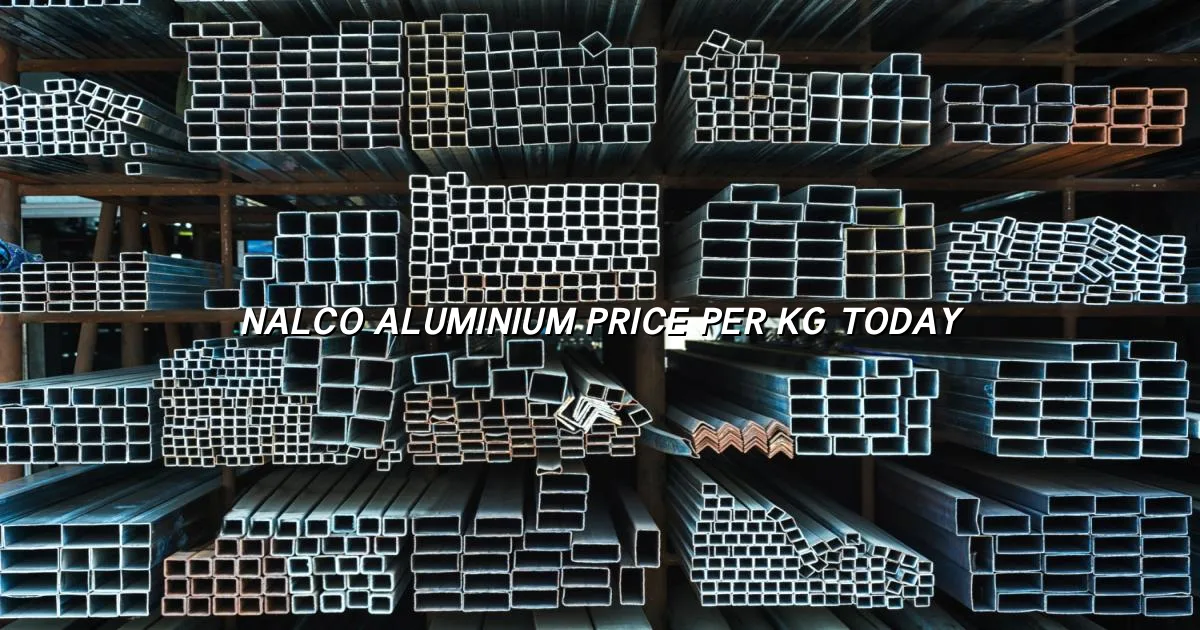
NALCO-linked pricing is watched closely because it tends to move with the broader aluminium price today in India, which in turn follows MCX aluminium futures and the LME aluminium benchmark. The local market may quote a slightly different number depending on freight, GST, quantity and whether the buyer wants primary metal or a converted alloy, but the base rate is built on the same global signals.
- 1 gram: ₹0.29
- 10 grams: ₹2.87
- 100 grams: ₹28.68
- 1 kg: ₹286.81
- 1 metric tonne: ₹286,811.00
That tonne number matters more than most retail buyers realise. Aluminium is still priced and hedged in bulk, so fabricators, cable makers and stockists think in tonnes first, then convert the cost back to per kg terms when they raise a quotation.
NALCO Aluminium Price Per Kg Across Units
Today's Aluminium rate is Less than One Rupees per gram. At this rate, 10 grams of Aluminium costs Three Rupees.
| Unit | Weight | Price (INR) | Price in Words |
|---|---|---|---|
| 1 Gram | 1.0000 g | ₹0.29 | Less than One Rupees |
| 8 Grams | 8.0000 g | ₹2.29 | Two Rupees |
| 10 Grams | 10.0000 g | ₹2.87 | Three Rupees |
| 100 Grams | 100.0000 g | ₹28.68 | Twenty Nine Rupees |
| 1 Kilogram | 1,000.0000 g | ₹286.81 | Two Hundred and Eighty Seven Rupees |
| 1 Ounce (oz) | 28.3495 g | ₹8.13 | Eight Rupees |
| 1 Troy Ounce | 31.1035 g | ₹8.92 | Nine Rupees |
| 1 Metric Ton | 1,000,000.0000 g | ₹286,811.00 | Two Lakh Eighty Six Thousand Eight Hundred and Eleven Rupees |
How NALCO Aluminium Rate Gets Built in the Indian Market
The short version is this: the domestic rate does not come out of thin air. It starts with LME grade A aluminium, gets converted from USD per metric tonne into rupees, and then picks up import duty, freight, handling and local market spread. By the time the metal reaches an industrial buyer in India, the invoice is already shaped by more than one market.
Why the benchmark keeps moving
MCX aluminium usually mirrors the LME trend first, then reacts to the rupee-dollar move. If the dollar strengthens, the landed cost rises even when the LME chart looks flat. Add the usual import duty structure and GST, and the effective price paid by Indian buyers can shift faster than the headline global number suggests. That is why a single day’s move in London can show up in Bengaluru, Pune or Faridabad before the week ends.
Supply matters just as much. China still drives the global primary aluminium story, and its smelter output is the number traders watch when they want a read on oversupply or tightening. Power costs also bite hard here because smelting is energy intensive; a change in coal or electricity tariffs can alter production economics faster than people expect. For Indian consumers, that feeds straight into the local aluminium rate.
Primary metal, scrap and alloy premiums
Primary aluminium generally trades above secondary aluminium because it offers tighter purity and predictable chemistry. A recycled billet or scrap mix may be cheaper, but the discount depends on contamination and alloy composition. That is not a small detail. A cable maker, for example, will happily pay more for cleaner metal if it means fewer processing headaches later.
Alloy grades also carry their own premium. A 1100 series product used for foil or general forming does not behave the same way as 6061 material used in structural work, and the market prices that difference. Packaging demand from foil and can stock, construction demand for window frames and facades, plus automotive lightweighting all keep the premium structure alive. That is the real-world reason the NALCO aluminium price per kg today is only the starting point, not the full story.
NALCO Aluminium Rate — Last 10 Days
The most recent Aluminium price on record (2026-09-17) is Less than One Rupees per gram.
| Date | Price (INR/g) | Change |
|---|---|---|
| 2026-09-17 | ₹0.29 | +0.00 |
| 2026-09-16 | ₹0.29 | +0.00 |
| 2026-09-15 | ₹0.28 | +0.00 |
| 2026-09-14 | ₹0.28 | 0.00 |
| 2026-09-13 | ₹0.28 | +0.00 |
| 2026-09-12 | ₹0.28 | 0.00 |
| 2026-09-11 | ₹0.28 | 0.00 |
| 2026-09-10 | ₹0.29 | 0.00 |
| 2026-09-09 | ₹0.29 | +0.00 |
| 2026-09-08 | ₹0.29 | — |
What Traders and Fabricators Should Watch Next
Aluminium is a cyclical industrial metal, so the market rarely moves in a straight line for long. A run-up in MCX aluminium futures can be followed by a pause once stockists finish hedging, while a softer LME aluminium chart can drag Indian prices lower even when local demand holds up. Traders who watch both markets usually get a cleaner read than those who watch only one screen.
Seasonality still matters. Construction demand tends to pick up before the hotter months, then gets patchy through the monsoon when site activity slows. Packaging demand can firm up around the festive period, and that is when foil, cans and consumer goods suppliers begin to rebuild inventory. None of this is dramatic on its own, but it adds up when the market is already tight on supply.
For a practical view, compare today’s aluminium price with the recent 52-week range, the 7-day and 30-day moves, and the 10-day history on this page. That tells you whether the current quote is a normal trading level or a stretched one. Indian buyers also need to keep an eye on domestic smelting capacity from players like Hindalco and Vedanta, because local output can soften import dependence when supply is flowing well.
One more point that gets missed too often: aluminium does not have the same retail investment wrappers that gold and silver enjoy in India. No sovereign bonds. No neat digital metal SIP that solves procurement for a fabrication shop. For most buyers, the real tools are MCX aluminium futures, spot market negotiation, and a sensible procurement calendar. Plain and simple.
NALCO Aluminium Price Per Kg Today — FAQs
The NALCO aluminium price per kg today in India is ₹0.29 as of September 17, 2026. This page tracks the live aluminium rate used by buyers, traders and fabricators.
Not exactly. NALCO prices reflect supplier and domestic market pricing, while MCX aluminium futures follow the broader benchmark influenced by LME aluminium, USD/INR and import costs. In practice, the two move in the same direction most of the time.
1 kg of aluminium is ₹286.81. Ten kilograms work out to ₹2,868.11, and 100 kg comes to ₹28,681.10.
Aluminium price shifts with the LME aluminium benchmark, the rupee-dollar rate, local logistics, power costs and supply from smelters. Indian prices also absorb import duty and freight before they reach the market.
Yes. Primary aluminium generally costs more than secondary or recycled aluminium because it carries higher purity and tighter specification. Scrap rates depend on alloy mix, contamination and recovery quality.
Use the chart, comparison table and 10-day history on this page. They show the daily aluminium price today in India, the recent trend and the move against 7-day, 30-day and 1-year references where available.
