Quick Conversions
Old Aluminium Price Per Kg — 10-Day Market Trend
All prices in ₹ per gram · daily rate, updated once per day
What the old aluminium price per kg means in the Indian market today
The phrase old aluminium price per kg usually points to scrap market buying rates, not a polished exchange contract number. Even so, the benchmark matters. Using today’s live aluminium rate of ₹0.29 per gram on September 17, 2026, the straight-line equivalent comes to about ₹285.79 per kg before the usual deductions that scrap dealers, remelters and extrusion units apply for grade, dirt, attachments and melt loss. That is why a fabricator in Ahmedabad or a scrap trader in Coimbatore often checks MCX aluminium futures first, then compares that benchmark with local aluminium bhav on the ground.
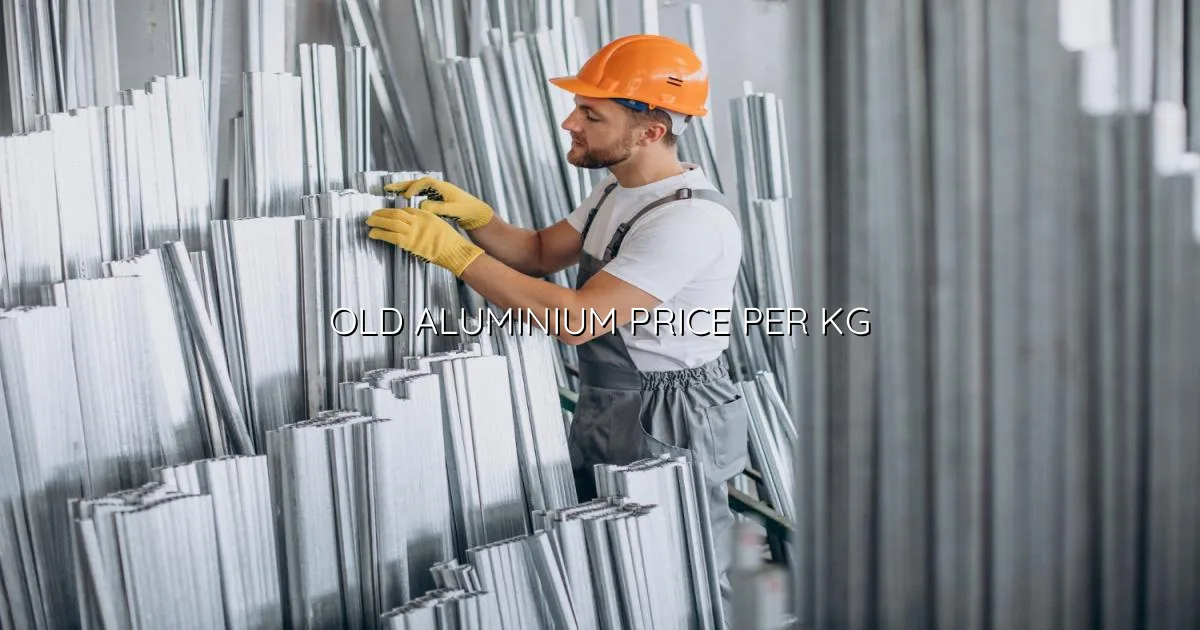
There is a practical reason people search for this keyword. Old aluminium rarely moves on purity alone. Window frame scrap, utensil scrap, mixed section scrap, cable scrap and painted profile scrap all fetch different rates per kg. Still, the broad anchor remains the primary aluminium market, which in India is tracked through MCX aluminium and globally through LME aluminium. If LME aluminium jumps overnight and the rupee weakens, scrap yards do not ignore that. They simply pass it through with their own discount structure.
- 1 gram benchmark: ₹0.29
- 10 grams benchmark: ₹2.86
- 100 grams benchmark: ₹28.58
- 1 kg benchmark: ₹285.79
- 1 metric tonne benchmark: ₹285,787.00
For buyers, that list is a starting point, not the final invoice. Scrap merchants usually quote below primary aluminium ingot price because old material needs sorting, cleaning and remelting. Some lots deserve a healthy discount. Some do not. Clean segregated extrusion scrap can trade surprisingly firm when secondary smelters need feedstock and primary ingot prices are elevated.
Old Aluminium Price Per Kg Converted Across Weights
Today's Aluminium rate is Less than One Rupees per gram. At this rate, 10 grams of Aluminium costs Three Rupees.
| Unit | Weight | Price (INR) | Price in Words |
|---|---|---|---|
| 1 Gram | 1.0000 g | ₹0.29 | Less than One Rupees |
| 8 Grams | 8.0000 g | ₹2.29 | Two Rupees |
| 10 Grams | 10.0000 g | ₹2.86 | Three Rupees |
| 100 Grams | 100.0000 g | ₹28.58 | Twenty Nine Rupees |
| 1 Kilogram | 1,000.0000 g | ₹285.79 | Two Hundred and Eighty Six Rupees |
| 1 Ounce (oz) | 28.3495 g | ₹8.10 | Eight Rupees |
| 1 Troy Ounce | 31.1035 g | ₹8.89 | Nine Rupees |
| 1 Metric Ton | 1,000,000.0000 g | ₹285,787.00 | Two Lakh Eighty Five Thousand Seven Hundred and Eighty Seven Rupees |
Why old aluminium scrap does not trade exactly at the exchange rate
Anyone buying old aluminium by the kilo learns this quickly: the headline benchmark and the yard rate are related, but they are not the same number. India’s price discovery starts with LME grade A aluminium, then moves through USD/INR, freight, import parity and MCX aluminium futures. Physical scrap comes after that. Every intermediate step adds friction.
Primary metal sets the tone, scrap follows with a discount
Primary aluminium is the clean benchmark metal. It is what exchange-linked contracts really refer to, and what many downstream manufacturers compare against while negotiating procurement. Old aluminium scrap, by contrast, sits in the secondary market. A remelter buying mixed scrap has to think about oxidation, paint burn-off, fasteners, iron inserts and actual metal recovery. So even if the benchmark works out to ₹285.79 per kg, a local old aluminium rate can land lower because the buyer is pricing yield, not just weight.
Import economics matter too. Domestic replacement cost for aluminium often reflects LME aluminium, the dollar-rupee exchange rate, and import duty structures that can include roughly 7.5% basic customs duty on many products before GST and local logistics. That does not mean every scrap quote mechanically tracks duty. It does mean the fresh metal alternative becomes more expensive when landed cost rises, and that tends to support aluminium scrap price levels across industrial clusters.
Grade, alloy and end-use decide the real value
Not all aluminium scrap is equal. Old 1100-series material, common in certain sheet and foil-linked applications, behaves differently from 6061 or other structural alloy scrap seen in fabrication and engineering work. Extrusion offcuts with known alloy identity are usually easier to value than mixed old utensil scrap or demolition scrap from construction sites. If a lot is clean, dry and sorted, the buyer can pay up. If it arrives mixed with rubber, steel screws or powder-coated sections, the quote drops. Harsh, but that is how the trade works.
There is also the demand side. Chinese smelter output still shapes global price direction because China accounts for roughly 60% of global primary aluminium production. In India, secondary demand from die-casters, cable makers, small foundries and profile manufacturers can tighten regional old aluminium bhav even when broader industrial sentiment feels flat. The packaging side matters as well. Rising aluminium foil consumption and can-stock demand keep more eyes on scrap recovery streams than many casual buyers realise.
Old Aluminium Price Per Kg — Last 10 Days History
The most recent Aluminium price on record (2026-09-17) is Less than One Rupees per gram.
| Date | Price (INR/g) | Change |
|---|---|---|
| 2026-09-17 | ₹0.29 | +0.00 |
| 2026-09-16 | ₹0.29 | +0.00 |
| 2026-09-15 | ₹0.28 | +0.00 |
| 2026-09-14 | ₹0.28 | 0.00 |
| 2026-09-13 | ₹0.28 | +0.00 |
| 2026-09-12 | ₹0.28 | 0.00 |
| 2026-09-11 | ₹0.28 | 0.00 |
| 2026-09-10 | ₹0.29 | 0.00 |
| 2026-09-09 | ₹0.29 | +0.00 |
| 2026-09-08 | ₹0.29 | — |
How to read old aluminium price per kg over time
Short-term price movement tells only part of the story. Old aluminium price per kg behaves like a cyclical industrial indicator because aluminium itself sits at the intersection of construction, transport, packaging and power. Demand improves, scrap collection tightens, and local rates harden. Construction activity slows in the monsoon, demolition scrap availability changes, and buyers turn cautious. The market breathes in these cycles.
For anyone tracking price seriously, the cleanest approach is to watch MCX aluminium futures alongside local scrap quotes. MCX gives you a transparent benchmark in rupees. LME aluminium tells you what the global market is doing. The spread between those exchange-linked benchmarks and actual old aluminium scrap price per kg reveals where the physical market stands. A narrow spread can mean strong scrap demand or tight secondary supply. A wide spread often points to poor scrap quality, weak local offtake, or both.
Industrial buyers should keep one more distinction in mind. Aluminium sheet price, aluminium foil price and aluminium ingot price are fabricated or semi-finished product values. They include conversion cost, power, rolling or casting charges, scrap generation loss and plant margin. The old aluminium rate per kg sits further back in the chain. Comparing scrap directly with finished sheet is rarely useful unless you understand processing recovery and alloy matching.
India’s broader aluminium story still supports long-term attention. Large domestic producers such as Hindalco and Vedanta have built meaningful smelting capacity, yet the market remains sensitive to global moves because base metals trade in an interconnected system. Power cost is a major variable; aluminium smelting is energy-intensive, and shifts in coal and electricity costs can alter the cost curve fast. That is one reason aluminium futures can move sharply even before local scrap yards rewrite their boards.
From an investor angle, this is not gold. There are no sovereign bond-style retail wrappers for aluminium in India, and there is no mainstream digital-metal SIP product tied to it. Exposure usually comes through MCX aluminium futures, broader commodity funds with base metal exposure, or indirectly through listed metal companies. For manufacturers and traders, though, the real value of following this page is procurement timing. If the benchmark suggests ₹285.79 per kg and your supplier offers sorted old aluminium far below that, the next question should be obvious: what is hidden in the lot?
Seasonality adds another layer. Pre-summer construction activity can lift demand for profiles, panels and related scrap-fed remelting. Festive-season packaging demand often improves aluminium foil and can-related consumption. Heavy monsoon months can slow site activity and disturb scrap flows at the same time. None of these factors works alone, but together they influence the old aluminium price per kg far more than a one-line daily rate ever can.
Old Aluminium Price Per Kg — FAQ for Buyers and Traders
Based on today's benchmark aluminium rate of ₹0.29 per gram, the equivalent old aluminium price per kg works out to roughly ₹285.79 on September 17, 2026. Actual old aluminium scrap price can trade below primary aluminium depending on alloy mix, contamination, and local scrap yard demand.
No. MCX aluminium tracks exchange-traded primary aluminium linked to LME grade A aluminium and USD/INR movement. Old aluminium price per kg usually refers to scrap or recycled aluminium in the physical market, which often trades at a discount to primary metal.
At today's benchmark of ₹0.29 per gram, 1 metric tonne equals approximately ₹285,787.00. Scrap-grade old aluminium may settle lower depending on recovery yield and sorting quality.
Primary aluminium ingot is priced off exchange benchmarks and purity standards, while old aluminium scrap carries deductions for oxidation loss, paint, attachments, iron contamination, and remelting cost. In practice, secondary aluminium buyers quote after considering recovery percentage rather than headline metal price alone.
Indian aluminium pricing broadly follows LME aluminium, adjusted for USD/INR, logistics, and duties. A basic customs duty of around 7.5% on many aluminium imports, along with GST and handling cost, can affect domestic replacement cost. MCX aluminium futures usually reflect that benchmark more closely than local scrap bhav.
Check alloy type, moisture, mixed metal content, wall thickness, and expected melting recovery. A low quoted rate can become expensive if yield is poor. Comparing the local scrap offer with the benchmark value of ₹285.79 per kg helps buyers judge whether the discount is actually justified.
