Quick Conversions
Aluminium MCX Price Trend Over the Last 10 Days
All prices in ₹ per gram · daily rate, updated once per day
Aluminium MCX price today and what it means on the ground
The aluminium MCX price today stands at ₹0.29 per gram as of September 17, 2026. For traders, this is the benchmark. For fabricators in places like Ahmedabad, Pune, Coimbatore or Rajkot, it is the starting point before freight, GST, alloy premium and conversion cost get added. MCX aluminium futures matter because they give the Indian market a clean domestic reference, while the underlying global cue still comes from LME aluminium.
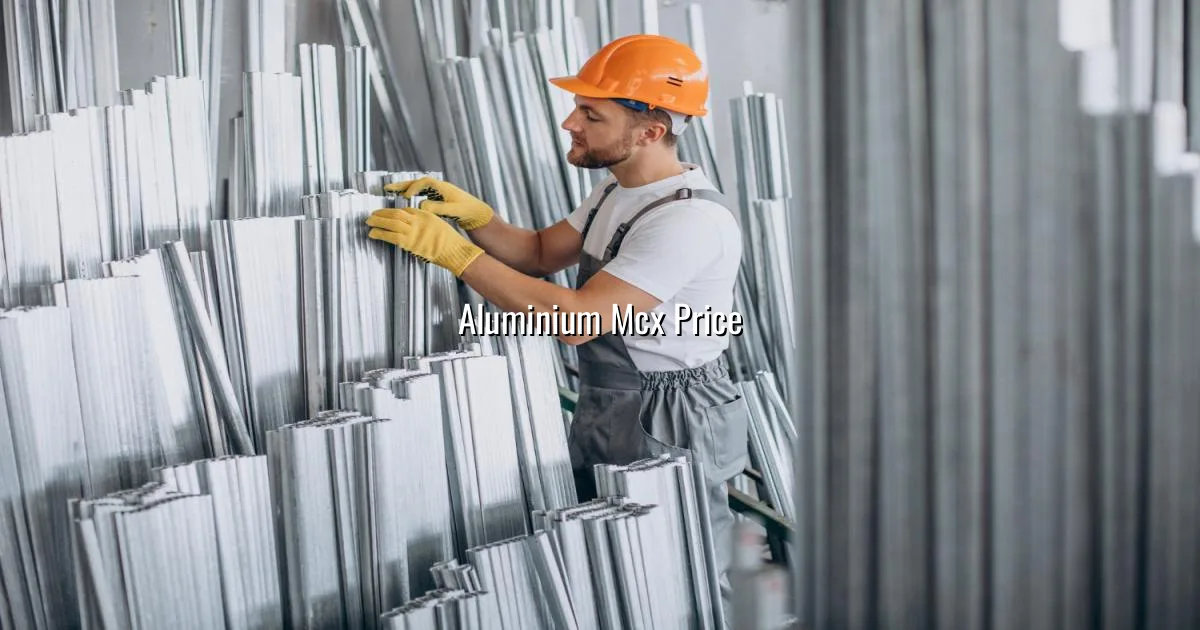
If you are searching for the live aluminium bhav, keep one thing in mind: most wholesale business is talked about in kg or tonne, not grams. Still, the per-gram rate helps standardise the number across pages and tools. It makes quick comparisons easier, especially when the market is moving fast and buyers want a clean read before calling a stockist or placing a futures order.
- 1 gram: ₹0.29
- 10 grams: ₹2.87
- 100 grams: ₹28.72
- 1 kg: ₹287.16
- 1 metric tonne: ₹287,164.00
Why MCX is the reference that Indian buyers actually watch
LME aluminium gives the world benchmark, but MCX aluminium is where Indian price discovery becomes practical. The contract reflects international metal values through the lens of rupee movement, local costs and domestic trading sentiment. If the rupee weakens sharply against the dollar, the aluminium spot price in India can stay firm even when the overseas market looks flat. That catches new buyers off guard all the time.
Anyone buying aluminium ingot price-linked material, sheet, wire rod or extrusion feedstock should treat the exchange number as the base metal line. The rest of the invoice is commercial reality.
Aluminium MCX Price by Gram, Kg and Tonne
Today's Aluminium rate is Less than One Rupees per gram. At this rate, 10 grams of Aluminium costs Three Rupees.
| Unit | Weight | Price (INR) | Price in Words |
|---|---|---|---|
| 1 Gram | 1.0000 g | ₹0.29 | Less than One Rupees |
| 8 Grams | 8.0000 g | ₹2.30 | Two Rupees |
| 10 Grams | 10.0000 g | ₹2.87 | Three Rupees |
| 100 Grams | 100.0000 g | ₹28.72 | Twenty Nine Rupees |
| 1 Kilogram | 1,000.0000 g | ₹287.16 | Two Hundred and Eighty Seven Rupees |
| 1 Ounce (oz) | 28.3495 g | ₹8.14 | Eight Rupees |
| 1 Troy Ounce | 31.1035 g | ₹8.93 | Nine Rupees |
| 1 Metric Ton | 1,000,000.0000 g | ₹287,164.00 | Two Lakh Eighty Seven Thousand One Hundred and Sixty Four Rupees |
How the MCX aluminium rate is built from global and local market forces
No serious buyer looks at the aluminium rate in isolation. The number you see on MCX is tied to the LME grade A aluminium benchmark, the USD/INR exchange rate and the landed cost logic that shapes import parity. India also has a basic customs duty on aluminium of around 7.5% in many cases, and then GST sits on the transaction. So even before a processor rolls sheet or converts coil into foil, there is already a structure behind the price.
Primary metal, recycled metal and alloy premiums do not trade at the same level
That distinction matters more than many first-time buyers realise. Primary aluminium, the sort linked to exchange benchmarks, offers consistent chemistry and higher purity. Secondary aluminium comes from recycled scrap streams, and it usually trades cheaper. Usually, not always. If scrap availability tightens or segregation quality improves, the gap can narrow.
Then come the alloy issues. Commercially pure 1100 series material used in some sheet and foil applications does not get quoted the same way as 6061 alloy used in structural fabrication. Billets for extrusion, electrical conductor metal, pressure die-casting alloys, rolled sheet for cladding and aluminium foil price for packaging all sit on top of the base rate with their own premium structure. That is why the live MCX aluminium figure is essential, but never the whole story.
Power costs and Chinese output still move this market
Aluminium smelting consumes a huge amount of electricity. There is no way around it. When coal prices spike, hydro output gets disrupted or regional power tariffs shift, the global supply curve can change very quickly. China, which accounts for roughly 60% of global primary aluminium output, remains the single biggest supply-side influence. A jump in Chinese smelter output can cool sentiment. Production cuts, environmental curbs or energy restrictions can do the opposite in a hurry.
On the demand side, India keeps adding support. Construction uses aluminium in window frames, facades, roofing and curtain walls. Automotive makers keep pushing lightweight parts to improve efficiency. Packaging demand has become especially interesting, with aluminium foil consumption rising in food, pharma and ready-to-eat categories. So yes, traders stare at screens. But the real economy sits behind those ticks.
Aluminium MCX Price History — Recent Daily Rates
The most recent Aluminium price on record (2026-09-17) is Less than One Rupees per gram.
| Date | Price (INR/g) | Change |
|---|---|---|
| 2026-09-17 | ₹0.29 | +0.00 |
| 2026-09-16 | ₹0.29 | +0.00 |
| 2026-09-15 | ₹0.28 | +0.00 |
| 2026-09-14 | ₹0.28 | 0.00 |
| 2026-09-13 | ₹0.28 | +0.00 |
| 2026-09-12 | ₹0.28 | 0.00 |
| 2026-09-11 | ₹0.28 | 0.00 |
| 2026-09-10 | ₹0.29 | 0.00 |
| 2026-09-09 | ₹0.29 | +0.00 |
| 2026-09-08 | ₹0.29 | — |
Tracking aluminium MCX price for outlook, trading and procurement
Aluminium is a cyclical industrial commodity. It does not behave like gold. Nobody buys it for sentiment or wedding demand. It trades on growth, manufacturing, power costs, inventory and industrial confidence. That is exactly why the aluminium MCX price deserves close tracking if you run procurement for a plant, trade short-term momentum, or simply want a better sense of how the base metals complex is behaving.
A sensible workflow starts with both exchanges. Watch MCX aluminium futures for domestic execution and hedging. Watch LME aluminium for the global lead. The gap between the two often tells a story about the rupee, local demand or import economics. If LME aluminium softens but MCX holds up, currency is usually part of the answer. If both markets move in the same direction with volume, the signal is cleaner.
Seasonality plays a role too, though not in a mechanical way. Construction-linked demand often improves ahead of the summer working season as projects accelerate. Packaging can strengthen around festive consumption cycles, especially where foil and can stock matter. Monsoon months tend to slow some project execution, which can cool physical offtake in parts of the country. These are not hard rules. They are tendencies, and good buyers learn to read them alongside exchange data rather than instead of it.
For investors, aluminium is mostly an indirect commodity story in India. The main route is MCX futures, not sovereign bonds or digital retail wrappers like you see in gold. Some diversified commodity funds and global resource-linked funds may carry base metal exposure, but serious price tracking still comes back to exchange screens. If you are not trading futures yourself, the next best use of this data is procurement timing: watch the 10-day pattern, compare it with the 30-day move, and avoid buying large volume blindly into a sharp rally unless your production schedule leaves no choice.
Domestic supply has improved over the years thanks to major Indian producers such as Hindalco and Vedanta, yet the market still responds to global cues because aluminium is an internationally priced metal. Local smelting capacity helps, but it does not isolate India from LME, freight flows or energy-cost shocks. That is why the 52-week context matters. A buyer who only looks at today's tick misses whether the market is actually cheap, expensive or simply noisy.
One final point. Aluminium sheet price, aluminium foil price and aluminium alloy quotes can diverge sharply from the headline spot number during periods of strong downstream demand. The exchange tells you what the metal is worth. The supply chain tells you what the finished material will actually cost. Smart procurement teams pay attention to both.
Quick takeaway for buyers
Use the live MCX aluminium rate as your base, compare it with recent history, then ask suppliers to break out alloy premium, fabrication charge and freight separately. That simple habit makes quotations far easier to judge.
Aluminium MCX Price FAQ for Indian Buyers and Traders
The aluminium MCX price today in India is ₹0.29 per gram as of September 17, 2026. That works out to about ₹287.16 per kg and ₹287,164.00 per metric tonne.
MCX aluminium futures generally track the international LME grade A aluminium benchmark, then adjust for the USD/INR exchange rate, import parity and local market costs. In practice, Indian traders watch both LME aluminium and the rupee together, because a stronger dollar can keep domestic aluminium rates firm even if overseas prices cool.
At today\'s MCX-linked rate, 1 kg aluminium costs ₹287.16. Fabricated items such as sheet, foil, extrusion and alloy products can trade above this base metal value because conversion charges, thickness, temper and freight all get added on top.
MCX aluminium is aligned with primary aluminium pricing, not mixed scrap. The benchmark follows exchange-grade metal comparable to LME grade A quality. Secondary aluminium and aluminium scrap price levels often trade at a discount, although that discount can narrow when scrap supply gets tight.
Several moving parts push it around: LME aluminium, Chinese smelter output, global power costs, inventory data, the rupee-dollar rate and local demand from cable, packaging, auto and construction buyers. Since aluminium smelting is power-intensive, even a shift in energy costs can change sentiment quickly.
Use the live MCX aluminium price as the base reference, then compare it with supplier quotes for ingot, billet, sheet, foil or alloy. If the spot-linked base is ₹0.29 per gram today, the final invoice can still vary depending on GST, freight, alloy grade, fabrication margins and order size.
