Quick Conversions
Aluminium Prices India — 10 Day Market Trend
All prices in ₹ per gram · daily rate, updated once per day
Aluminium prices in India today, in plain numbers
Aluminium prices India buyers are tracking today come in at ₹0.29 per gram as of September 17, 2026. For most people searching this term, the real question is not the per-gram figure by itself. It is what that number means in practical buying terms for sheet, ingot, cable, extrusion and scrap-linked trade. In the Indian market, day-to-day price discovery usually follows the global LME aluminium benchmark and domestic MCX aluminium futures, with rupee movement adding its own push or drag.
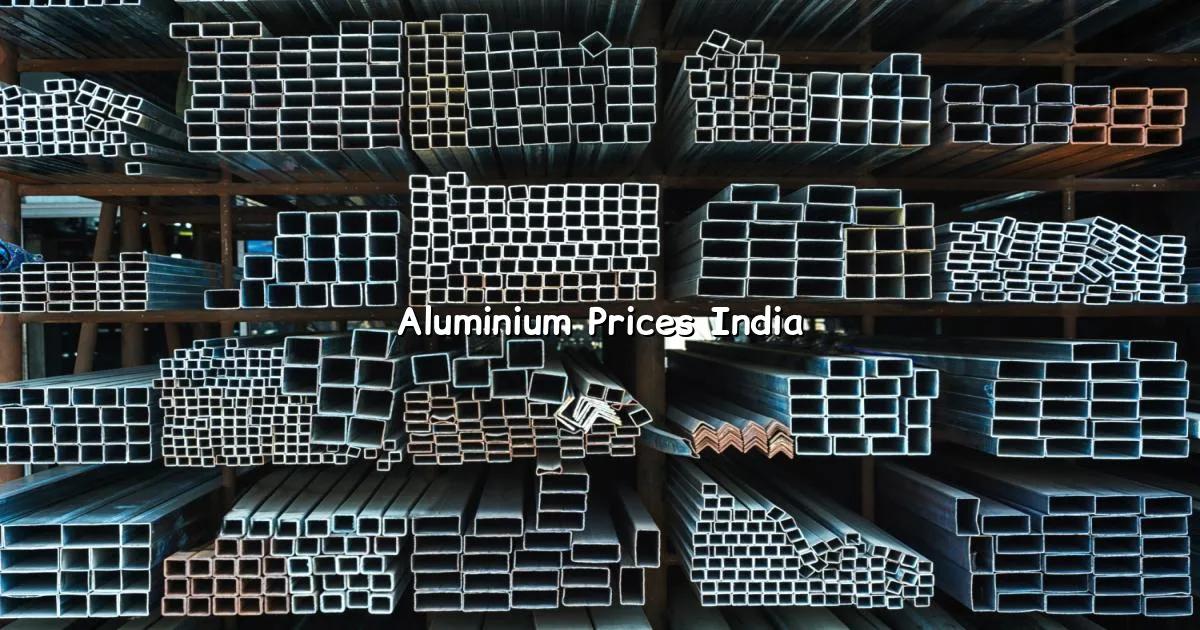
If you run a fabrication unit in Rajkot, source foil stock in Baddi, or simply want to compare aluminium bhav with copper before placing a purchase order, this live rate gives you the market baseline. It is not the final invoice number on every order, of course. Stockist margin, alloy grade, GST, freight and quantity all matter. Still, the benchmark starts here.
- 1 gram: ₹0.29
- 10 grams: ₹2.87
- 100 grams: ₹28.68
- 1 kg: ₹286.81
- 1 metric tonne: ₹286,811.00
Why the benchmark matters
MCX aluminium futures serve as the closest domestic trading reference for Indian participants who want a transparent, exchange-linked rate. LME aluminium sets the global tone. Once USD/INR shifts and local taxes enter the picture, Indian aluminium spot price expectations move quickly. That is why even smaller traders who do not touch futures still keep one eye on the exchange screen before quoting a customer.
There is another reason this matters. Aluminium looks cheap on a per-gram basis compared with precious metals, but industrial consumption happens at scale. A small move in the aluminium rate can materially change input cost for a packaging converter or an extrusion plant buying several tonnes a month.
Aluminium Prices India by Gram, Kg and Tonne
Today's Aluminium rate is Less than One Rupees per gram. At this rate, 10 grams of Aluminium costs Three Rupees.
| Unit | Weight | Price (INR) | Price in Words |
|---|---|---|---|
| 1 Gram | 1.0000 g | ₹0.29 | Less than One Rupees |
| 8 Grams | 8.0000 g | ₹2.29 | Two Rupees |
| 10 Grams | 10.0000 g | ₹2.87 | Three Rupees |
| 100 Grams | 100.0000 g | ₹28.68 | Twenty Nine Rupees |
| 1 Kilogram | 1,000.0000 g | ₹286.81 | Two Hundred and Eighty Seven Rupees |
| 1 Ounce (oz) | 28.3495 g | ₹8.13 | Eight Rupees |
| 1 Troy Ounce | 31.1035 g | ₹8.92 | Nine Rupees |
| 1 Metric Ton | 1,000,000.0000 g | ₹286,811.00 | Two Lakh Eighty Six Thousand Eight Hundred and Eleven Rupees |
What actually moves aluminium prices in India
Indian aluminium pricing does not appear out of thin air. It is built from an international base, then adjusted by currency, taxes and local demand. The headline metal price usually starts with LME grade A aluminium, quoted globally in dollars per tonne. Convert that into rupees, account for landed cost, add basic customs duty that is around 7.5% in many import scenarios, then layer GST and logistics. That is the backbone of the domestic aluminium rate.
MCX, LME and the rupee all pull on the same rope
Watch the rupee on a day when LME aluminium is flat and you will understand how local prices can still move. A weaker rupee makes imported metal costlier. A firmer rupee can soften landed price pressure. That translation effect becomes more visible in a metal like aluminium because the product flows through so many manufacturing chains, from foil and cans to busbars, ladders, ACP panels and automotive components.
Power cost is another big factor, and this one is often underestimated by casual observers. Aluminium smelting is brutally energy-intensive. If coal prices rise, power tariffs harden or smelters face supply interruptions, global aluminium sentiment responds. China remains the giant in the room, producing roughly 60% of the world's primary aluminium. So when Chinese smelter output expands, supply worries ease. When production curbs or energy disruptions hit, the market tightens fast.
Primary metal, scrap and alloy premiums do not trade at the same level
Primary aluminium and secondary aluminium rarely command the same price. Primary metal, especially material aligned with LME grade A standards, carries a purity advantage that matters for electrical and high-spec industrial use. Recycled metal and aluminium scrap price levels can sit lower, sometimes meaningfully so, depending on contamination, recovery yield and the alloy mix coming out of the scrap stream.
Then come the grade differences buyers face in the real market. A plain 1100 series aluminium product, a 5052 sheet and a 6061 structural section are not quoted the same way, even if the base aluminium ingot price started from the same market reference. Fabrication route, temper, thickness tolerance and BIS-related quality requirements all influence the premium above the benchmark. Anyone buying aluminium sheet price today for cladding or machine covers learns this very quickly.
Demand is changing too. India's construction pipeline continues to support window frames, roofing systems and facade use. Packaging demand keeps rising, particularly in foil and food applications. Auto makers want lighter parts to improve efficiency, and EV platforms have only reinforced that trend. So yes, aluminium prices India searches often start with a simple rate check, but the deeper story is industrial demand meeting globally priced supply.
Aluminium Prices India — Last 10 Days
The most recent Aluminium price on record (2026-09-17) is Less than One Rupees per gram.
| Date | Price (INR/g) | Change |
|---|---|---|
| 2026-09-17 | ₹0.29 | +0.00 |
| 2026-09-16 | ₹0.29 | +0.00 |
| 2026-09-15 | ₹0.28 | +0.00 |
| 2026-09-14 | ₹0.28 | 0.00 |
| 2026-09-13 | ₹0.28 | +0.00 |
| 2026-09-12 | ₹0.28 | 0.00 |
| 2026-09-11 | ₹0.28 | 0.00 |
| 2026-09-10 | ₹0.29 | 0.00 |
| 2026-09-09 | ₹0.29 | +0.00 |
| 2026-09-08 | ₹0.29 | — |
Market outlook: how to read aluminium prices in India over time
Aluminium is not a defensive metal in the way many Indians think about gold. It is a cyclical industrial commodity. That distinction matters. Prices tend to respond to manufacturing momentum, infrastructure spending, freight conditions, energy costs and global growth expectations. If construction activity picks up, packaging runs hot and automotive demand holds, aluminium usually finds support. If factory orders slow and export demand weakens, the rate can lose altitude in a hurry.
For traders and procurement teams, the cleanest starting point is to track MCX aluminium futures alongside LME aluminium. LME gives you the global signal. MCX shows how that signal is being priced in India in rupees. The spread between expectation and actual spot buying often narrows quickly in active markets, which is why processors and stockists use exchange benchmarks as their daily compass even when final commercial deals happen offline.
Seasonality plays a part as well, though not in a perfectly neat way every year. Construction and infrastructure procurement often improve before the heavy monsoon period. Packaging demand can strengthen around festive sales cycles when food, pharma and consumer goods volumes rise. Monsoon months may temporarily slow some construction-linked consumption. None of this works like a clock, but experienced buyers pay attention because the pattern shows up often enough to matter.
India has stronger domestic aluminium capability than many people assume. Major producers such as Hindalco and Vedanta give the country meaningful smelting capacity, yet import parity still influences pricing because aluminium remains a globally traded benchmark metal. Domestic supply, export arbitrage, downstream capacity and import economics all meet in the same market. That is why the aluminium spot price in India can stay tightly linked to LME even when local production is healthy.
Retail investors should be realistic here. Aluminium does not have the easy retail wrappers that gold enjoys in India. There are no sovereign bond equivalents for this metal, and no widely adopted digital SIP-style aluminium product. If someone wants direct exposure, MCX futures are the main route, though they are best suited to informed participants who understand margin, contract cycles and volatility. Others may only get indirect exposure through commodity-oriented funds or companies tied to the base metals cycle.
For manufacturers and contractors, the use case is more practical than speculative. The better approach is disciplined procurement: monitor the 10-day history, compare today's rate with one month and one year levels, then lock quantities when the market gives you a workable band. Chasing the absolute bottom rarely ends well. A decent landed cost, secured on time, is often worth more than waiting for the last rupee.
That is the real value of following aluminium prices India on a daily basis. You are not just watching a number. You are tracking a live industrial signal that feeds into building materials, transport, packaging, electrical systems and margins across the supply chain.
Aluminium Prices India — FAQ for Buyers and Traders
Aluminium prices in India today stand at ₹0.29 per gram as of September 17, 2026. That works out to roughly ₹286.81 per kg. MetalsCost tracks the daily aluminium rate using market-linked data influenced by MCX aluminium futures and the global LME aluminium benchmark.
The 1 kg aluminium price in India today is ₹286.81. Industrial buyers usually watch the aluminium per kg and tonne rate more closely than the per-gram figure because fabrication, extrusion, casting and sheet procurement are normally priced on larger weights.
Indian aluminium pricing broadly follows the international LME grade A aluminium benchmark, converted into rupees through the prevailing USD/INR exchange rate. MCX aluminium futures then provide the domestic traded reference. Landed cost can also reflect basic customs duty of around 7.5%, GST, freight and local premium.
The aluminium bhav moves with changes in LME aluminium, MCX aluminium futures, rupee-dollar fluctuations, power costs at smelters and shifts in demand from construction, packaging, auto and electrical cable manufacturers. Chinese smelter output is especially important because China accounts for about 60% of global primary aluminium production.
Usually, yes. Primary aluminium linked to LME grade A purity generally trades above recycled secondary aluminium or aluminium scrap price levels. The gap varies by alloy, contamination, recovery cost and end use. A cable producer or foil converter may still prefer primary metal even if it costs more, simply because purity matters.
At today's rate of ₹0.29 per gram, one metric tonne of aluminium is approximately ₹286,811.00. Bulk industrial contracts may differ depending on alloy grade, delivery terms, GST treatment and whether the order is for ingot, billet, sheet or scrap.
