Gold Rate in Dollar — 10-Day India Trend
All prices in ₹ per gram · daily rate, updated once per day
Gold rate in dollar matters because India buys global gold in a local currency
The phrase gold rate in dollar sounds international, and it is. Global bullion is quoted in US dollars per troy ounce first, then converted into rupees for Indian buyers. That is the chain. So if you are checking today's gold price in India at ₹14,187.07 per gram on July 28, 2026, you are really looking at the local outcome of two moving parts at once: the global dollar quote and the USD/INR exchange rate.

International desks usually benchmark against the LBMA PM fix and live gold spot price, while Indian traders keep one eye on MCX gold for near-term price discovery. Retail customers do not buy directly at that benchmark, of course. Import costs, duty, dealer spreads and GST sit on top of it. Still, if you want to understand sone ka bhav properly, the dollar quote is where the story begins.
Today's live gold rates by purity and weight
Here is the useful part for buyers comparing jewellery, coins, bars or investment products. The figures below use today's 24K base rate and derive the common Indian purity levels from that benchmark.
- 24K gold (1 gram): ₹14,187.07 — pure gold or 999 gold benchmark
- 22K gold (1 gram): ₹13,004.82 — roughly the 916 gold level used in most jewellery
- 18K gold (1 gram): ₹10,640.31 — common in diamond and designer jewellery
- 24K gold (10 grams): ₹141,870.74
- 24K gold (100 grams): ₹1,418,707.38
- 24K gold (1 kg): ₹14,187,073.77
- 22K gold (10 grams): ₹130,048.18
- Gold per tola: ₹165,475.19 for 24K, based on 1 tola = 11.6638 grams
That gap between global and local pricing is exactly why two headlines can both be true on the same day: gold may be flat in dollar terms, yet higher in India because the rupee weakened. It happens more often than casual buyers realise.
Gold Rate Conversion by Weight in India
Today's Gold rate is Fourteen Thousand One Hundred and Eighty Seven Rupees per gram. At this rate, 10 grams of Gold costs One Lakh Forty One Thousand Eight Hundred and Seventy One Rupees.
| Unit | Weight | Price (INR) | Price in Words |
|---|---|---|---|
| 1 Gram | 1.0000 g | ₹14,187.07 | Fourteen Thousand One Hundred and Eighty Seven Rupees |
| 8 Grams | 8.0000 g | ₹113,496.59 | One Lakh Thirteen Thousand Four Hundred and Ninety Seven Rupees |
| 10 Grams | 10.0000 g | ₹141,870.74 | One Lakh Forty One Thousand Eight Hundred and Seventy One Rupees |
| 100 Grams | 100.0000 g | ₹1,418,707.38 | Fourteen Lakh Eighteen Thousand Seven Hundred and Seven Rupees |
| 1 Kilogram | 1,000.0000 g | ₹14,187,073.77 | One Crore Forty One Lakh Eighty Seven Thousand Seventy Four Rupees |
| 1 Ounce (oz) | 28.3495 g | ₹402,196.45 | Four Lakh Two Thousand One Hundred and Ninety Six Rupees |
| 1 Troy Ounce | 31.1035 g | ₹441,267.65 | Four Lakh Forty One Thousand Two Hundred and Sixty Eight Rupees |
| 1 Metric Ton | 1,000,000.0000 g | ₹14,187,073,766.00 | Fourteen Hundred and Eighteen Crore Seventy Lakh Seventy Three Thousand Seven Hundred and Sixty Six Rupees |
Why the gold rate in dollar and the jeweller's tag are never the same number
A lot of buyers search the international gold price in USD, then walk into a store expecting the same clean conversion into rupees. That is not how the retail market works. The bullion benchmark gives you the base metal value. The jewellery bill adds everything else the market has to carry, and some of that is unavoidable.
Conversion is only step one
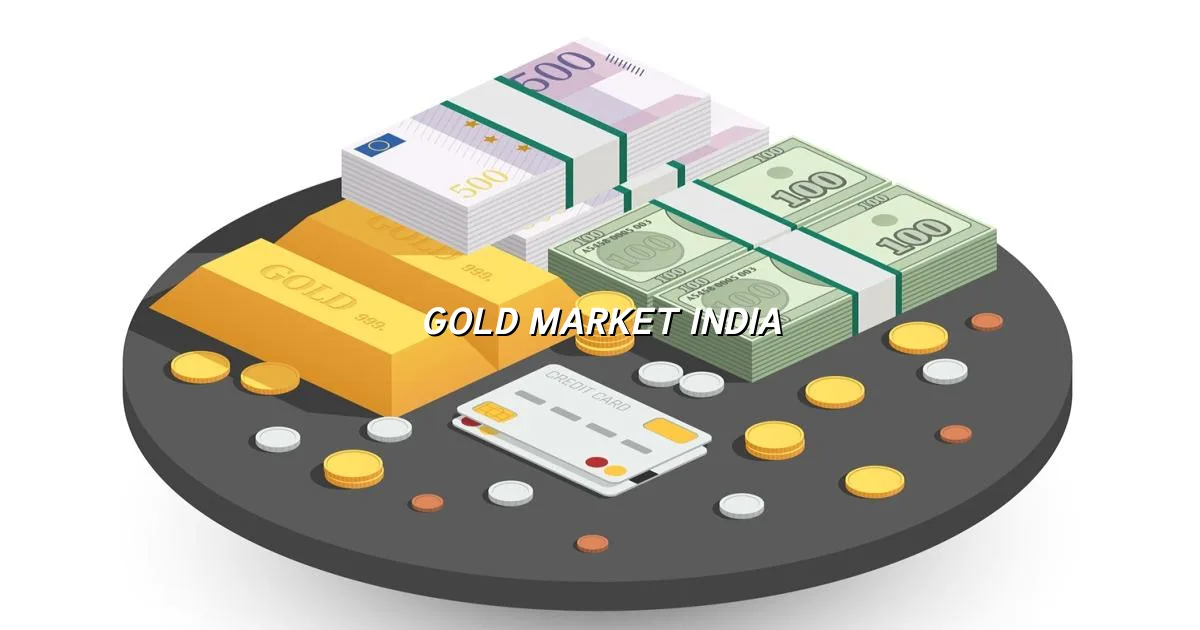
Start with the global spot quote in dollars. Convert it into rupees using the current USD/INR rate. Then factor in India's import duty structure, transportation, refining, dealer margin and 3% GST on purchase. By the time the price reaches a showroom, the number has moved. If the rupee slips sharply against the dollar, domestic gold can jump even without a dramatic change in LBMA gold.
That is why traders follow currency moves almost as closely as they follow bullion. A geopolitical flare-up, a surprise US inflation print, or a shift in Federal Reserve rate expectations can lift the dollar, move Treasury yields and change global risk sentiment in a single session. Gold reacts. Then the rupee conversion reacts. Indian prices follow.
Purity, hallmarking and making charges change the final bill
Pure 24K gold is the reference rate, but most ornaments are sold in 22K gold or 18K gold. Under BIS hallmark standards, 916 gold indicates 22K purity, 750 indicates 18K, and 999 indicates near-pure bullion. That stamp matters. It tells you the purity is certified, not guessed across the counter.
Even so, purity is only part of the cost. Gold jewellery making charges can be quoted as a fixed rupee amount or as a percentage of metal value. Buying 22K jewellery costs less per gram than 24K on paper, but the making charges often close that gap. Coins and bars are cleaner to price. Jewellery rarely is. During wedding season, stores also hold firmer margins because demand is less price-sensitive than most buyers would like to believe.
For someone comparing gold coin price, gold bar price and jewellery rate on the same day, the smart move is simple: check the live benchmark first, then ask separately for purity, making charges and GST. One combined number hides too much.
Gold Rate History — Last 10 Days in India
The most recent Gold price on record (2026-07-28) is Fourteen Thousand One Hundred and Eighty Seven Rupees per gram. This is down by One Hundred and Ninety Rupees from the previous day's rate of ₹14,377.40.
| Date | Price (₹/g) | Change |
|---|---|---|
| 2026-07-28 | ₹14,187.07 | -190.33 |
| 2026-07-27 | ₹14,377.40 | +36.55 |
| 2026-07-26 | ₹14,340.85 | 0.00 |
| 2026-07-25 | ₹14,340.85 | +59.88 |
| 2026-07-24 | ₹14,280.97 | -291.28 |
| 2026-07-23 | ₹14,572.25 | +177.46 |
| 2026-07-22 | ₹14,394.78 | +141.04 |
| 2026-07-21 | ₹14,253.74 | +104.76 |
| 2026-07-20 | ₹14,148.99 | +33.54 |
| 2026-07-19 | ₹14,115.44 | — |
For investors, the dollar gold quote is only half the picture
Investors who watch only the global chart miss what actually drives returns in India. Gold can move one way in dollar terms and deliver a different result in rupee terms because currency does the rest of the work. Over longer periods, that difference adds up. A rising gold spot price helps, obviously. A weaker rupee can amplify it. A stable rupee can mute it. That is why Indian portfolios should judge gold in INR even if the headline trade starts in USD.
Physical buying still dominates household behaviour. People buy chains, bangles, coins and small bars because they want something tangible. Fair enough. But that route comes with friction: making charges, storage concerns, resale cuts, and occasional purity disputes if the hallmark is missing or unclear. If the goal is investment rather than adornment, cleaner options exist.
A gold ETF tracks market price without the headache of lockers or wastage. A gold SIP through mutual fund structures gives disciplined monthly exposure. Digital gold appeals to first-time buyers because entry amounts are tiny, though platform quality and redemption terms matter more than the marketing suggests. Then there is the Sovereign Gold Bond. It remains one of the few products that gives exposure to gold price movement and also pays 2.5% annual interest. There is a lock-in, yes, and exchange liquidity can vary, but for long-horizon investors it solves two old problems at once: no making charges and no storage risk.
Seasonality still influences demand. Akshaya Tritiya, Dhanteras and the broader wedding cycle routinely pull fresh buying into the market, especially across tier-2 cities where jewellery demand stays culturally sticky. Central bank buying has also become a bigger theme globally. That matters because official-sector demand can support the market even when speculative flows wobble. Add in crude oil volatility, inflation anxiety and geopolitical stress, and gold rarely lacks a reason to stay relevant.
So if you are tracking the gold rate in dollar, do it with context. Watch the dollar quote, yes. Watch the rupee with equal seriousness. Then decide whether you are buying for use, for savings, or for portfolio insurance. Three different goals. Three different ways to own the same metal.
If you want a practical rule, here it is: for jewellery, focus on hallmark and total landed cost; for short-term allocation, compare ETF pricing and liquidity; for patient capital, look hard at the Sovereign Gold Bond route when fresh issuance is available. The metal is the same. The outcome for your wallet is not.
Gold Rate in Dollar — Questions Indian Buyers Ask
Gold rate in dollar usually refers to the international gold spot price quoted in US dollars per troy ounce, often tracked against the LBMA PM fix. For Indian users, today's domestic benchmark on this page is ₹14,187.07 per gram for 24K gold as of July 28, 2026.
Using today's 24K base price of ₹14,187.07 per gram, the derived 22K gold rate is ₹13,004.82 per gram, while 18K comes to ₹10,640.31 per gram. Jeweller billing can still be higher after making charges and GST.
At today's live 24K rate of ₹14,187.07 per gram, 10 grams of gold works out to ₹141,870.74. For 22K, 10 grams comes to ₹130,048.18.
India imports most of its gold, so the international USD gold price directly affects local pricing. Dealers broadly track the LBMA gold benchmark, convert it using the USD/INR exchange rate, then factor in import duty, logistics, refinery margins and GST. That is why a stronger dollar or weaker rupee can push domestic gold higher even if global prices stay flat.
MCX gold reflects exchange-traded futures pricing, while a retail jewellery bill includes purity differences, wastage, making charges, GST and store margin. A BIS hallmark such as 916 gold for 22K or 999 gold for 24K confirms purity, but it does not include design or labour cost.
That depends on the purpose. Physical gold is useful for jewellery and gifting, but it carries making charges and storage risk. A gold ETF tracks market price more cleanly. A Sovereign Gold Bond adds 2.5% annual interest and avoids making charges, though it comes with a lock-in and market-price movement if sold early on exchanges.
