Quick Conversions
Jindal Aluminium Price Per Kg — 10-Day Trend
All prices in ₹ per gram · daily rate, updated once per day
Jindal Aluminium Price Per Kg in India Today
Jindal aluminium price per kg is trading at ₹0.29 today, and that number is the one most buyers actually want first. A fabricator does not care much about a neat headline rate if the coil or section bill lands above budget; a trader cares even less about theory and more about the lot size on the invoice. The live benchmark here is built off the broader aluminium market, with MCX aluminium futures and LME aluminium acting as the reference points.
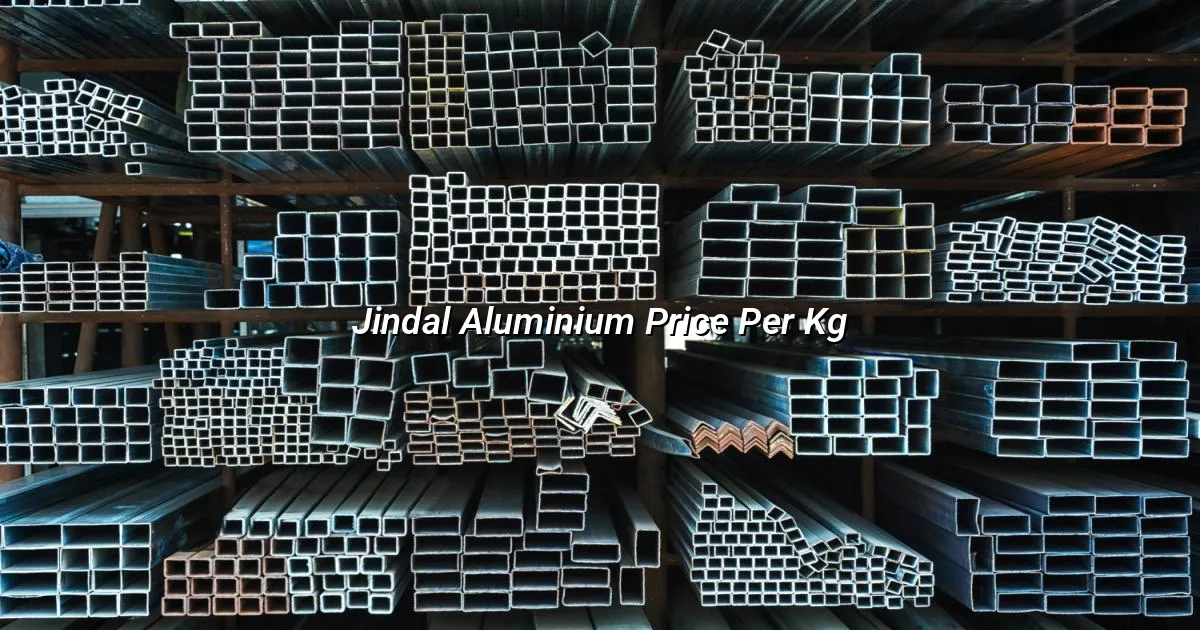
For a quick working estimate, the current rate translates cleanly across common buying sizes. That matters because procurement teams in India still think in kilograms, while distributors often quote in slabs of 10 kg, 100 kg, or a full tonne when orders get serious.
- 1 gram: ₹0.29
- 10 grams: ₹2.86
- 100 grams: ₹28.58
- 1 kg: ₹285.79
- 1 metric tonne: ₹285,787.00
If you are comparing Jindal aluminium price per kg against a local dealer quote, keep one thing in mind: the factory rate and the market benchmark are never identical. Finishing, transport, and alloy specification can push the bill up a fair bit, especially on fabricated aluminium sheet and profile stock.
Jindal Aluminium Price Per Kg Across Units
Today's Aluminium rate is Less than One Rupees per gram. At this rate, 10 grams of Aluminium costs Three Rupees.
| Unit | Weight | Price (INR) | Price in Words |
|---|---|---|---|
| 1 Gram | 1.0000 g | ₹0.29 | Less than One Rupees |
| 8 Grams | 8.0000 g | ₹2.29 | Two Rupees |
| 10 Grams | 10.0000 g | ₹2.86 | Three Rupees |
| 100 Grams | 100.0000 g | ₹28.58 | Twenty Nine Rupees |
| 1 Kilogram | 1,000.0000 g | ₹285.79 | Two Hundred and Eighty Six Rupees |
| 1 Ounce (oz) | 28.3495 g | ₹8.10 | Eight Rupees |
| 1 Troy Ounce | 31.1035 g | ₹8.89 | Nine Rupees |
| 1 Metric Ton | 1,000,000.0000 g | ₹285,787.00 | Two Lakh Eighty Five Thousand Seven Hundred and Eighty Seven Rupees |
What Pushes Jindal Aluminium Rate Up or Down
Most people see the final per kg number and stop there. That is a mistake. Jindal aluminium price per kg usually sits on top of the international benchmark, and the real driver is still the same old chain: LME aluminium in USD per tonne, rupee conversion, import duty, GST, and the local premium added by mills and stockists. India still leans on imported primary aluminium for a lot of price discovery, so the global market keeps a hand on the lever.
Why the benchmark matters more than the brand name
MCX aluminium futures often move in step with LME grade A aluminium, which is the standard benchmark for primary metal. That matters because LME grade A purity sets the base for global pricing, while Indian buyers pay a conversion-adjusted domestic figure. A basic customs duty of around 7.5% still sits in the background, and after GST the landed cost can drift enough to change buying decisions for sheet, foil, and extrusion stock.
There is also a real quality gap between primary and secondary aluminium. Recycled secondary aluminium can trade cheaper, but the discount depends on contamination, alloy mix, and consistency. A 6061 extrusion buyer does not want scrap-level uncertainty. A 1100 series foil buyer wants even less of it. That is why product-specific Jindal aluminium sheet price, aluminium foil price, and aluminium ingot price rarely mirror the bare benchmark one-to-one.
Demand matters too. Packaging plants pull more aluminium foil when food and pharma output stays strong. Construction demand rises when window frames, roofing sheets, and facade work pick up. India’s infrastructure spending also feeds into this. On the supply side, Chinese smelter output is still the big swing factor globally, because China accounts for roughly 60% of primary aluminium production. If power costs rise or output gets cut, the market feels it quickly.
Jindal Aluminium Price Per Kg — 10-Day History
The most recent Aluminium price on record (2026-09-17) is Less than One Rupees per gram.
| Date | Price (INR/g) | Change |
|---|---|---|
| 2026-09-17 | ₹0.29 | +0.00 |
| 2026-09-16 | ₹0.29 | +0.00 |
| 2026-09-15 | ₹0.28 | +0.00 |
| 2026-09-14 | ₹0.28 | 0.00 |
| 2026-09-13 | ₹0.28 | +0.00 |
| 2026-09-12 | ₹0.28 | 0.00 |
| 2026-09-11 | ₹0.28 | 0.00 |
| 2026-09-10 | ₹0.29 | 0.00 |
| 2026-09-09 | ₹0.29 | +0.00 |
| 2026-09-08 | ₹0.29 | — |
Should You Track Jindal Aluminium Price Per Kg Like an Investor?
For a retail buyer, this price is mostly a procurement tool. For a trader or fabricator, it is a risk signal. Aluminium is a cyclical industrial metal, and the daily tape tells you a lot about manufacturing demand, energy costs, and whether the market is pricing in tight supply or a softer quarter ahead. That is why experienced buyers watch MCX aluminium futures alongside LME aluminium spot, not after the fact but before placing orders.
Seasonality shows up more often than people admit. Construction demand tends to firm before summer work picks up. Festive-season packaging also lends support. The monsoon can slow site activity and delay dispatches, which is one reason mills and distributors sometimes see a quieter patch in mid-year. None of this is dramatic on its own, but when you stitch the pattern together with the 52-week high and low, the direction becomes easier to read.
India is also changing from the supply side. Domestic aluminium smelting capacity has expanded over the years through major producers such as Hindalco and Vedanta, yet the market still watches import parity closely because the local chain is tied to global pricing. That tension between home-grown capacity and imported benchmark pricing is exactly what keeps Jindal aluminium price per kg relevant to both shop-floor buyers and larger industrial accounts. There is no gold-style sovereign bond or neat retail SIP product for aluminium. For this metal, the real instruments are MCX contracts, procurement calendars, and a sharp eye on the industrial cycle.
Jindal Aluminium Price Per Kg — FAQs
The Jindal aluminium price per kg today is ₹0.29/kg as of September 17, 2026. This page tracks the live aluminium benchmark used by traders, fabricators, and buyers in India.
Not exactly. MCX aluminium futures reflect the exchange-traded benchmark, while Jindal aluminium sheets, coils, extrusions, and ingots are sold with fabrication, alloy, logistics, and dealer margins added on top.
The base price generally follows LME aluminium, converted into INR using the USD/INR exchange rate, then adjusted for import duty, GST, and local market premiums. That is why the retail per kg price can move even when the global spot market is quiet.
Because sheet, coil, foil, and extruded section prices include rolling or extrusion cost, alloy mix, thickness, finishing, and waste. Primary aluminium ingot is the raw input; fabricated products carry extra processing cost.
1 kg aluminium price today is 285.79 and 1 metric tonne works out to 285,787.00, before fabrication and dealer charges.
Yes, but not in the same way. Aluminium scrap price depends on alloy purity, contamination, and local supply. Secondary aluminium often trades at a discount to primary aluminium, especially when scrap quality is inconsistent.
