Quick Conversions
The Graph — Daily INR Uranium, 10 Sessions
All prices in ₹ per gram · daily rate, updated once per day
The uranium price graph: a picture worth checking daily
The graph above draws uranium's last ten daily references, ending at ₹17.29 per gram today, September 16, 2026. Graphs persuade faster than tables — which is their power and their danger. This page pairs the picture with its raw numbers (the table below) and the longer frames (the cards above), so the visual impression always has its receipts attached.
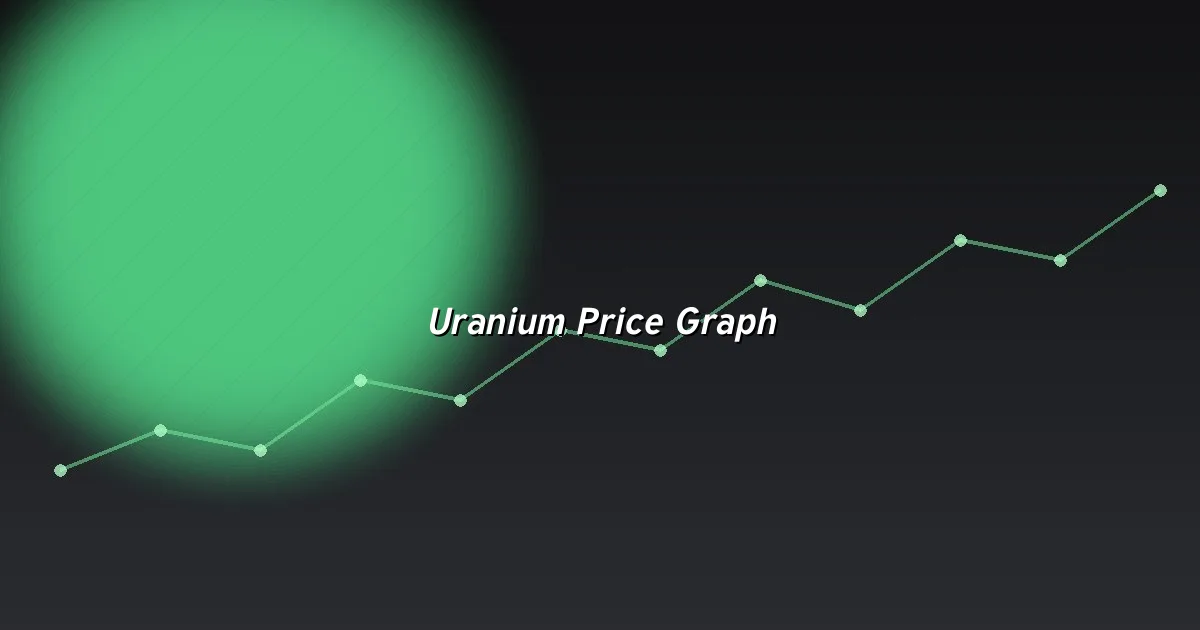
Reading the picture correctly:
- Steps, not curves: assessment-driven markets move in discrete repricings
- Flat ≠ frozen: quiet weeks are real market states, faithfully drawn
- Scale matters: a dramatic-looking slope may span paise — check the axis
- Two signals in one line: dollar benchmark and USD/INR, inseparably blended
Ten days is the graph's deliberate scope — enough to see the market's current gait, short enough to stay honest about what daily data can support.
Graphed Price, Converted by Weight
Today's Uranium rate is Seventeen Rupees per gram. At this rate, 10 grams of Uranium costs One Hundred and Seventy Three Rupees.
| Unit | Weight | Price (INR) | Price in Words |
|---|---|---|---|
| 1 Gram | 1.0000 g | ₹17.29 | Seventeen Rupees |
| 8 Grams | 8.0000 g | ₹138.35 | One Hundred and Thirty Eight Rupees |
| 10 Grams | 10.0000 g | ₹172.94 | One Hundred and Seventy Three Rupees |
| 100 Grams | 100.0000 g | ₹1,729.36 | One Thousand Seven Hundred and Twenty Nine Rupees |
| 1 Kilogram | 1,000.0000 g | ₹17,293.57 | Seventeen Thousand Two Hundred and Ninety Four Rupees |
| 1 Ounce (oz) | 28.3495 g | ₹490.26 | Four Hundred and Ninety Rupees |
| 1 Troy Ounce | 31.1035 g | ₹537.89 | Five Hundred and Thirty Eight Rupees |
| 1 Metric Ton | 1,000,000.0000 g | ₹17,293,573.00 | One Crore Seventy Two Lakh Ninety Three Thousand Five Hundred and Seventy Three Rupees |
The shapes uranium graphs make, and what each means
Spend time with uranium graphs and a small vocabulary of shapes recurs. The staircase up: patient financial buying lifting a thin market in legs — the 2021–24 signature. The cliff: a policy shock (Fukushima the archetype) repricing the demand horizon in days. The long shelf: equilibrium years where the line barely breathes and attention wanders — historically the accumulation zones veterans talk about later. And the spike-and-fade: a single large spot transaction printing drama the next assessment deflates.
What graphs hide
Every uranium graph omits the market's larger half: term contracts. The plotted line is spot — visible, volatile, a minority of actual volume. A flat spot graph during a heavy term-contracting quarter understates real tightening; a spiking spot graph on no term activity overstates it. Professionals annotate graphs mentally with contracting-cycle context; the assessment houses' commentary supplies it quarterly to anyone who looks.
The INR graph hides a second layer: currency. Rupee depreciation tilts the whole picture gently upward over long spans — pleasant for Indian holders of uranium-linked assets, misleading for anyone reading the slope as pure commodity strength. The cure is the habit this site keeps recommending: when the graph surprises, check USD/INR's graph for the same window before forming a view.
India on the graph
India never appears on the uranium graph directly — its purchases are sovereign, contracted and unpublished — yet the country shapes the line's future more each year. The 100 GW Nuclear Energy Mission, new reactor approvals and UCIL's expansion plans are demand-side mass accumulating beneath the graph. The line will price them in slowly, the way it priced China's build-out: invisibly, then suddenly, then permanently.
The Graph's Source Data — Daily Values
The most recent Uranium price on record (2026-09-16) is Seventeen Rupees per gram. This is up by Less than One Rupees from the previous day's rate of ₹17.28.
| Date | Price (INR/g) | Change |
|---|---|---|
| 2026-09-16 | ₹17.29 | +0.01 |
| 2026-09-15 | ₹17.28 | +0.03 |
| 2026-09-14 | ₹17.25 | +0.03 |
| 2026-09-13 | ₹17.22 | +0.00 |
| 2026-09-12 | ₹17.22 | +0.01 |
| 2026-09-11 | ₹17.21 | -0.01 |
| 2026-09-10 | ₹17.22 | +0.09 |
| 2026-09-09 | ₹17.14 | +0.08 |
| 2026-09-08 | ₹17.06 | +0.05 |
| 2026-09-07 | ₹17.01 | — |
A graph habit that earns its pixels
The productive way to use this graph is glance-and-frame: ten seconds on the line's shape, ten on the comparison cards, done. Daily diligence in a weekly-cadence market buys nothing extra; consistency buys everything. Over months, the accumulated glances build the regime intuition that no single session of study delivers — you will simply know how this market moves, the way locals know weather.
Pair the graph with one quarterly deep-read: producer guidance from Kazatomprom and Cameco, term-volume commentary, the Sprott premium. The graph shows the market's pulse; the quarterly reads supply its bloodwork. Together they cover what a costly terminal would tell you about uranium, minus the subscription.
The line redraws tomorrow with one more point. Whatever shape it is making — staircase, shelf or something the vocabulary lacks — the data below the graph will say so plainly, and the longer frames will keep the picture honest. That is all a price graph owes anyone, and this one pays it daily.
Uranium Price Graph — Visual-Data FAQ
Above — the graph plots the daily INR uranium reference, currently ₹17.29 per gram (September 16, 2026), across the last ten sessions, with the raw numbers in the table below it. It redraws every day.
Rupees per gram of natural uranium — the international U3O8 benchmark converted at the day's USD/INR rate. Multiply mentally by 1,000 for the per-kg view, or use the weight table on this page.
Because the underlying physical market did. With weekly assessments anchoring price discovery and few transactions between, flat stretches are honest data, not stale feeds. The steps carry the information.
Long-run U3O8 series come from UxC and TradeTech (with headline charts widely republished). The famous shape — 2007 spike, 2011–16 slide, 2021–24 staircase — appears in most coverage of the sector. This page maintains the recent daily record in INR.
None in substance; the words travel together in searches. This site keeps companion pages for each angle — the chart page leans technical, the trend page directional, and this graph page visual-first — all drawing the same daily benchmark.
