Quick Conversions
Aluminium Price Per Kilogram — 10-Day Trend
All prices in ₹ per gram · daily rate, updated once per day
Aluminium Price Per Kilogram in India Today
The aluminium price per kilogram in India today is ₹286.81, based on a live rate of ₹0.29 per gram on September 17, 2026. That is the number most buyers actually care about. Fabricators buy by the kg, stockists quote by the kg, and procurement teams compare landed cost against MCX aluminium futures and the LME aluminium benchmark before placing an order.

Retail users sometimes search for aluminium rate per gram, but on the ground the per-kilogram figure matters more because aluminium sheet, ingot, extrusion billet and scrap all move through the trade in heavier lots. Even small workshops in Rajkot, Coimbatore or Faridabad usually think in kilos first. If MCX aluminium ticks higher in the morning session, local aluminium bhav often adjusts fast, especially where stockists are carrying imported material linked to LME grade A aluminium.
Live aluminium rates converted into practical buying units
- 1 gram: ₹0.29
- 10 grams: ₹2.87
- 100 grams: ₹28.68
- 1 kilogram: ₹286.81
- 1 metric tonne: ₹286,811.00
That tonne conversion is not just a theoretical number. LME aluminium is quoted per metric tonne, so Indian traders often mentally move back and forth between tonne pricing, MCX contracts and local per-kg rates. For a buyer comparing aluminium ingot price or aluminium alloy procurement costs, that conversion tells you whether the domestic quote is tracking the wider market or drifting because of freight, inventory tightness or tax impact.
Aluminium Price Per Kilogram Across Common Weights
Today's Aluminium rate is Less than One Rupees per gram. At this rate, 10 grams of Aluminium costs Three Rupees.
| Unit | Weight | Price (INR) | Price in Words |
|---|---|---|---|
| 1 Gram | 1.0000 g | ₹0.29 | Less than One Rupees |
| 8 Grams | 8.0000 g | ₹2.29 | Two Rupees |
| 10 Grams | 10.0000 g | ₹2.87 | Three Rupees |
| 100 Grams | 100.0000 g | ₹28.68 | Twenty Nine Rupees |
| 1 Kilogram | 1,000.0000 g | ₹286.81 | Two Hundred and Eighty Seven Rupees |
| 1 Ounce (oz) | 28.3495 g | ₹8.13 | Eight Rupees |
| 1 Troy Ounce | 31.1035 g | ₹8.92 | Nine Rupees |
| 1 Metric Ton | 1,000,000.0000 g | ₹286,811.00 | Two Lakh Eighty Six Thousand Eight Hundred and Eleven Rupees |
What Really Drives the Aluminium Price Per Kilogram
The Indian aluminium rate does not appear out of thin air. It is built off international pricing, currency movement and local costs. Start with LME aluminium, convert it into rupees using USD/INR, then account for import-related charges, domestic premiums, logistics and GST in the downstream chain. That is why the aluminium price per kilogram can shift even on days when local demand feels flat.
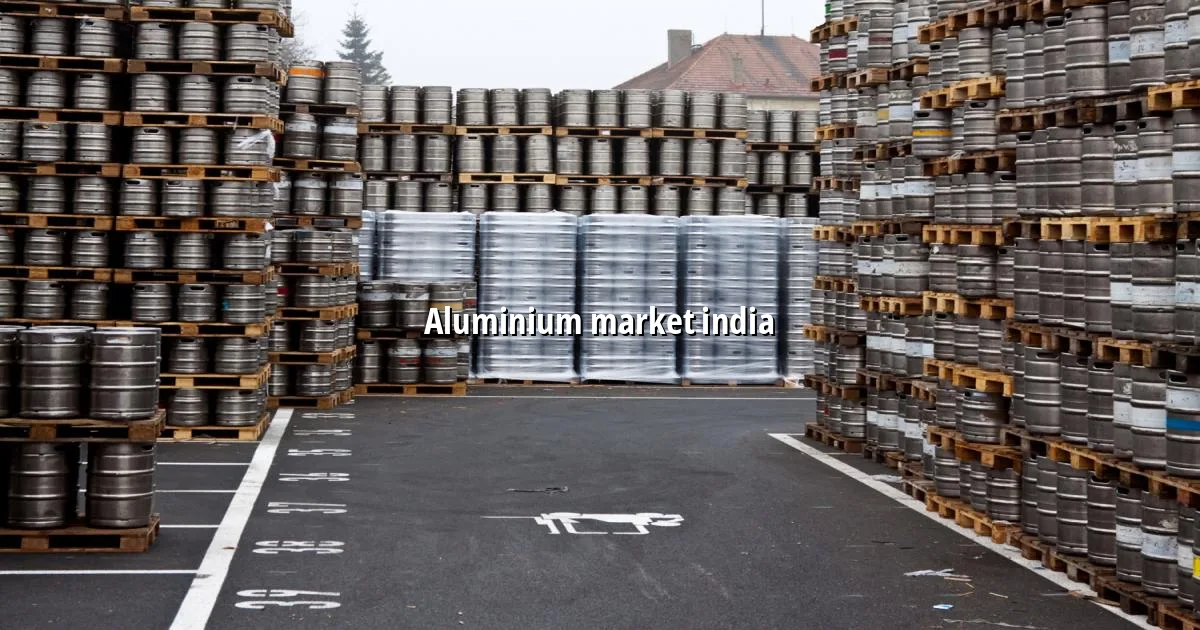
MCX, LME and import costs all feed into the local rate
MCX aluminium futures are the closest Indian reference for short-term price discovery. They broadly track LME grade A aluminium, which is the global benchmark for primary metal. Add the rupee-dollar exchange rate and the picture changes quickly. A weaker rupee can push the domestic aluminium spot price higher even if LME aluminium is only marginally up. Then there is policy. India has generally applied around 7.5% basic customs duty on many aluminium imports, and that cost feeds directly into landed value before GST enters the chain.
Power is another big variable, and people outside the trade often underestimate it. Aluminium smelting consumes huge amounts of electricity. So if coal prices rise, captive power costs move up, or energy availability tightens, the cost curve changes. China still accounts for roughly 60% of global primary aluminium production, which means any shift in Chinese smelter output, power controls or environmental restrictions tends to ripple into LME aluminium first and Indian prices soon after.
Primary metal, scrap and alloy grades do not trade at the same level
Buyers looking only at the headline aluminium price per kilogram can miss an important detail: finished procurement rarely happens at the pure benchmark number. Primary aluminium ingot, usually aligned more closely with LME grade A standards, commands a different price from secondary aluminium made from recycled feed. Aluminium scrap price can sit well below primary metal, but the discount is not fixed. Clean extrusion scrap, tense scrap and mixed cast scrap all trade differently because recovery rates and contamination differ.
The same logic applies to alloy grades. Commercially pure 1100 series aluminium used in foil and general applications does not price the same way as 6061 or other heat-treatable aluminium alloy grades used in structural, automotive or engineering applications. Sheet buyers, for instance, care less about the abstract aluminium spot price and more about the delivered aluminium sheet price after rolling margin, thickness tolerance, temper, BIS-related quality expectations and freight. A cable producer will also pay differently from a facade fabricator. Same metal family. Very different commercial reality.
Demand has its say too. Food packaging has lifted aluminium foil price sensitivity in recent years, lightweighting in vehicles has increased interest in aluminium alloy applications, and India’s infrastructure build-out keeps demand alive for extrusions, roofing and cladding. That is why local stockists sometimes hold firm on quotes even when the benchmark softens a little.
Aluminium Price Per Kilogram — Last 10 Days
The most recent Aluminium price on record (2026-09-17) is Less than One Rupees per gram.
| Date | Price (INR/g) | Change |
|---|---|---|
| 2026-09-17 | ₹0.29 | +0.00 |
| 2026-09-16 | ₹0.29 | +0.00 |
| 2026-09-15 | ₹0.28 | +0.00 |
| 2026-09-14 | ₹0.28 | 0.00 |
| 2026-09-13 | ₹0.28 | +0.00 |
| 2026-09-12 | ₹0.28 | 0.00 |
| 2026-09-11 | ₹0.28 | 0.00 |
| 2026-09-10 | ₹0.29 | 0.00 |
| 2026-09-09 | ₹0.29 | +0.00 |
| 2026-09-08 | ₹0.29 | — |
How to Track Aluminium Price Per Kilogram for Trading, Buying and Market Timing
Aluminium is not a safe-haven metal. It is a working metal. Demand rises with construction, transport, packaging, power infrastructure and factory output, then cools when industrial activity slows. That cyclical nature is exactly why the aluminium price per kilogram deserves regular tracking if you buy raw material, hedge costs or trade base metals. A sharp move in MCX aluminium futures can change procurement math in a single session, especially for businesses that buy several tonnes a month.
The cleanest way to monitor price direction in India is to watch both MCX aluminium and LME aluminium together. LME gives you the global lead. MCX tells you how that move is being translated into rupees. If both are rising, the message is straightforward. If LME is flat but MCX is climbing, currency is usually part of the story. If local stockist quotes are jumping more than either benchmark, then freight, inventory shortage or immediate industrial demand may be in play. That sort of read matters more than a generic headline about metal prices going up or down.
For investors, the route is narrower than it is in gold or silver. India does not have sovereign-style aluminium products or the sort of retail digital metal wrappers people are used to in precious metals. Exposure generally comes through MCX aluminium futures, diversified commodity strategies, or listed companies with meaningful base metal linkages. That makes aluminium a market for informed participants rather than casual buyers. You need to understand margining, volatility and how fast international cues feed through.
Industrial buyers take a different approach. They watch seasonal patterns. Construction-linked demand often improves ahead of the monsoon disruption and again as project execution picks up. Packaging demand can strengthen around festive production cycles, while a prolonged monsoon slowdown can soften immediate buying in some downstream segments. None of this works like clockwork, but the pattern is familiar enough that experienced purchase managers keep an eye on it. They also compare current levels against the 52-week range, not just yesterday’s quote.
Domestic supply dynamics add another layer. India has meaningful aluminium production capacity through companies such as Hindalco and Vedanta, which reduces complete dependence on imports, but import parity still matters because LME remains the global reference point. If domestic producers tighten supply, if export opportunities improve, or if imported metal becomes less competitive because of duty and freight, the local aluminium bhav can stay elevated longer than many buyers expect.
For anyone procuring regularly, the smart habit is simple: track the aluminium rate daily, compare it against the 10-day trend, and map that against your actual requirement cycle. A workshop buying 300 kg of sheet every month and a cable plant buying primary aluminium in tonnes should not react the same way to market noise. One can average purchases. The other may need hedging discipline. Either way, keeping an eye on the aluminium futures curve, the local aluminium spot price and the per-kilogram conversion keeps you grounded in numbers instead of market gossip.
Aluminium Price Per Kilogram — FAQs for Buyers and Traders
The aluminium price per kilogram in India today works out to ₹286.81, based on a live aluminium rate of ₹0.29 per gram as of September 17, 2026.
The conversion is simple: multiply the per-gram rate by 1,000. At today's aluminium rate of ₹0.29 per gram, the aluminium per kg price is ₹286.81.
Yes. MCX aluminium futures are the main Indian benchmark for industrial price discovery. Traders and fabricators often translate the quoted futures value into an effective aluminium price per kilogram after factoring in lot size, taxes, freight, and local stockist margins.
Primary aluminium is priced closer to LME grade A aluminium and MCX aluminium futures, while aluminium scrap price depends on contamination, alloy mix, recovery losses, and local demand. In practice, secondary aluminium usually trades below primary metal, though the gap changes from market to market.
Three things move it quickly: LME aluminium, the USD/INR exchange rate, and local taxes including roughly 7.5% basic customs duty on imports plus GST where applicable. Power costs also matter because aluminium smelting is extremely energy-intensive.
At today's rate of ₹0.29 per gram, 1 metric tonne of aluminium is valued at ₹286,811.00. That tonne-equivalent figure is useful for comparing Indian prices with LME contracts, which are benchmarked per metric tonne.
