Quick Conversions
MCX Aluminum Today — 10-Day Trend
All prices in ₹ per gram · daily rate, updated once per day
MCX Aluminum Today in India
MCX aluminum today is sitting at ₹0.29 as of September 17, 2026. That is the number most buyers, traders, and fabricators care about first, because it gives a quick read on the Indian aluminium market without forcing you to chase multiple screens.
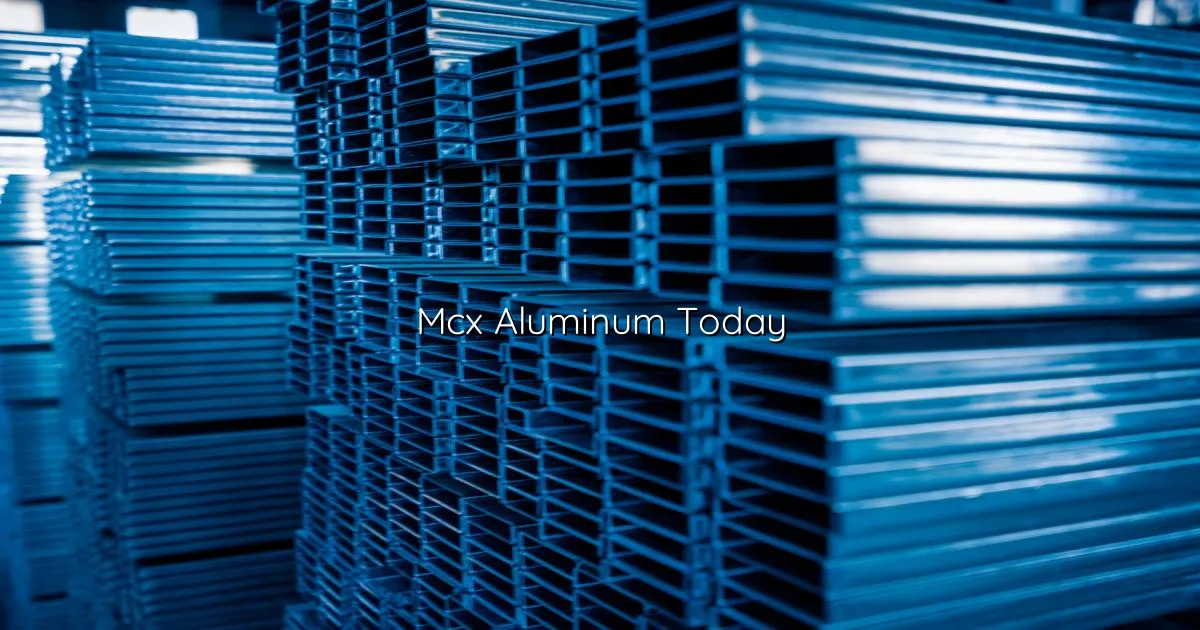
The real reference behind the screen is still the global benchmark. LME aluminium, especially Grade A material, sets the tone, and MCX futures translate that move into rupees after the exchange rate and domestic cost structure are folded in. That is why the number on MCX can move even when local buying looks quiet.
- 1 gram: ₹0.29
- 10 grams: ₹2.87
- 100 grams: ₹28.68
- 1 kg: ₹286.81
- 1 metric tonne: ₹286,811.00
For small buyers, the gram rate is easy to read. For anyone buying stock, sheet, extrusion feed, or billet-linked material, the kilogram and tonne numbers are the ones that actually matter. That is where MCX aluminium futures become useful, because they anchor the conversation to a clean market benchmark instead of a dealer’s loose quote.
MCX Aluminum Today — Price by Weight
Today's Aluminium rate is Less than One Rupees per gram. At this rate, 10 grams of Aluminium costs Three Rupees.
| Unit | Weight | Price (INR) | Price in Words |
|---|---|---|---|
| 1 Gram | 1.0000 g | ₹0.29 | Less than One Rupees |
| 8 Grams | 8.0000 g | ₹2.29 | Two Rupees |
| 10 Grams | 10.0000 g | ₹2.87 | Three Rupees |
| 100 Grams | 100.0000 g | ₹28.68 | Twenty Nine Rupees |
| 1 Kilogram | 1,000.0000 g | ₹286.81 | Two Hundred and Eighty Seven Rupees |
| 1 Ounce (oz) | 28.3495 g | ₹8.13 | Eight Rupees |
| 1 Troy Ounce | 31.1035 g | ₹8.92 | Nine Rupees |
| 1 Metric Ton | 1,000,000.0000 g | ₹286,811.00 | Two Lakh Eighty Six Thousand Eight Hundred and Eleven Rupees |
Why MCX Aluminum Today Moves the Way It Does
The Indian aluminium rate is not built in a vacuum. The starting point is usually LME Grade A aluminium, then the market adds currency conversion, logistics, import duty, and the local premium that emerges when supply tightens. If you follow mcx aluminum today closely, that chain of pricing is the part that explains most of the day-to-day movement.
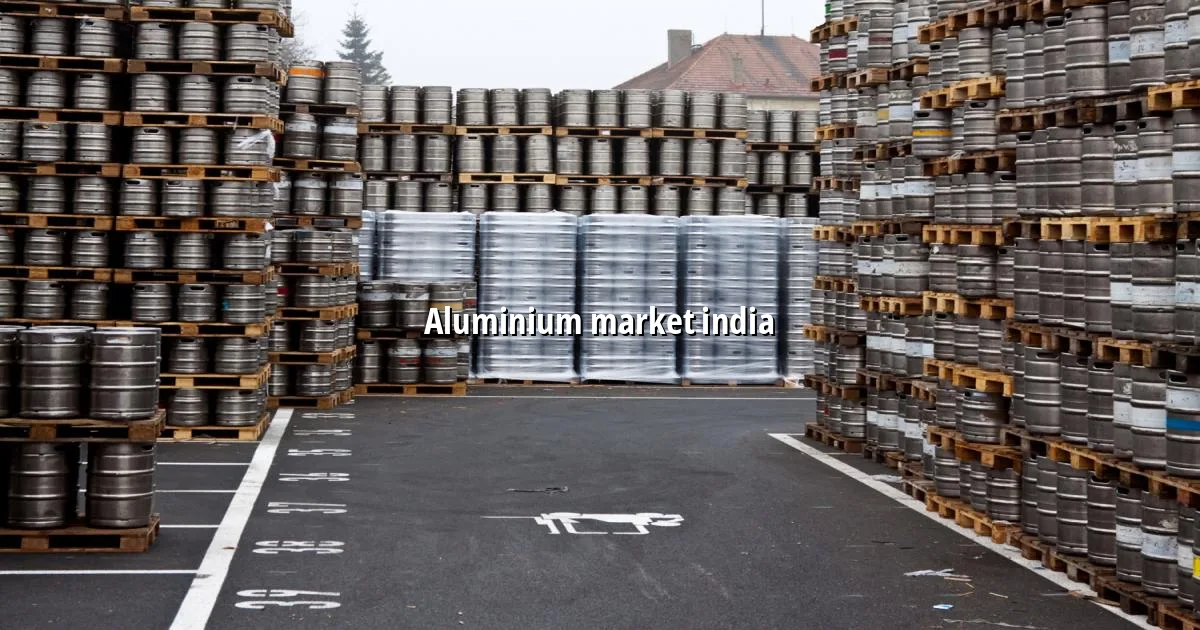
Duty, currency, and smelter costs do the heavy lifting
India’s landed aluminium cost usually reflects basic customs duty of about 7.5% on primary metal, with GST layered on top of the transaction. That alone can keep the domestic premium from drifting too far away from the international benchmark. Add a weaker rupee, and the MCX rate can climb even if LME is flat.
There is also the production side, which people sometimes ignore until power bills spike. Aluminium smelting is energy hungry, so coal prices, captive power availability, and regional tariffs matter more than outsiders expect. China still accounts for roughly 60% of global primary aluminium output, so any change in Chinese smelter operating rates or policy-driven curbs can ripple through the whole chain fast.
Buyers in India feel that through packaging demand, construction demand, and electrical cable ordering cycles. Foil, cans, roofing, facade systems, and window profiles all pull from the same broader pool of industrial aluminium demand, even if the finished products look nothing alike on the shelf.
Primary metal, scrap, and alloy pricing are not the same thing
Primary aluminium trades on purity and consistency. Secondary aluminium, or recycled scrap-based metal, usually sells at a discount because the chemistry is less uniform and the melt loss is higher. A clean 1100-series foil feedstock does not behave like 6061 structural alloy, so the premium is real and it shows up in the invoice, not just in theory.
That is why a local stockist’s quotation for aluminium sheet price, aluminium foil price, or aluminium ingot price can sit above the bare spot rate. Fabrication, conversion, and alloying all add something. The market often talks in one line, but the buying desk pays for several.
MCX Aluminum Today — 10-Day Price History
The most recent Aluminium price on record (2026-09-17) is Less than One Rupees per gram.
| Date | Price (INR/g) | Change |
|---|---|---|
| 2026-09-17 | ₹0.29 | +0.00 |
| 2026-09-16 | ₹0.29 | +0.00 |
| 2026-09-15 | ₹0.28 | +0.00 |
| 2026-09-14 | ₹0.28 | 0.00 |
| 2026-09-13 | ₹0.28 | +0.00 |
| 2026-09-12 | ₹0.28 | 0.00 |
| 2026-09-11 | ₹0.28 | 0.00 |
| 2026-09-10 | ₹0.29 | 0.00 |
| 2026-09-09 | ₹0.29 | +0.00 |
| 2026-09-08 | ₹0.29 | — |
Tracking MCX Aluminum Today as a Market Signal
For traders and procurement teams, mcx aluminum today is less about one number and more about the direction behind it. A flat day after a strong LME rally can still matter, because it tells you the domestic market is resisting the move, usually on weak physical offtake or a short-term inventory cushion. A small change is often more informative than a dramatic one.
That is also why people watch MCX aluminium futures against the London price instead of treating them as separate stories. The gap between global benchmark and Indian pricing widens when freight, duty, or local inventory stress gets uncomfortable. It narrows when supply comes back into the market or when downstream buying loses momentum.
Seasonality matters too, even in a metal that does not have festive sentiment in the same way gold does. Construction usually picks up before peak summer, packaging demand stays firm around food and beverage cycles, and monsoon often slows site work and secondary procurement. If you are buying aluminium per kg for fabrication, that rhythm can change your order timing more than a headline can.
India’s larger industrial story still points upward. The National Infrastructure Pipeline keeps medium-term demand in view, and domestic capacity from large producers such as Hindalco and Vedanta has improved the supply base. Even so, import dependence has not disappeared, so the market stays linked to LME aluminium, USD/INR, and global energy costs.
Retail investors sometimes ask whether aluminium behaves like gold or silver. It does not. There are MCX contracts and some commodity funds with base-metal exposure, but there is no neat sovereign-bond style product or digital-metal SIP for aluminium in India. This is a working industrial metal first, and an investment theme only after that.
The 52-week range tells a useful story, but not the whole one. Metals can look cheap on a chart and still be expensive for a fabricator if the rupee weakens or domestic premiums jump. That is why a clean price tracker is useful: it keeps the focus on the actual deal math, not the noise around it.
MCX Aluminum Today — Questions Buyers Ask
MCX aluminum today refers to the live aluminium rate tracked through India’s MCX-linked market view. The current reference price is ₹0.29 as of September 17, 2026, and it moves with LME aluminium, USD/INR, and local duty costs.
MCX aluminium futures usually track LME Grade A aluminium, then get adjusted for INR conversion, freight, import duty, and domestic supply conditions. A sharp move in LME almost always shows up in the MCX price with very little delay.
1 kg MCX aluminum today price is ₹286.81. That is the cleaner number for fabricators, stockists, and buyers who quote in kilograms rather than grams.
The aluminium rate moves because the benchmark changes in London, the rupee moves against the dollar, and MCX futures react to fresh order flow. Power cost news, Chinese smelter output, and stock changes also matter.
Yes. Primary aluminium, usually LME Grade A quality, costs more than secondary or recycled metal because the purity is tighter and the chemistry is more consistent. Scrap pricing depends on alloy mix, contamination, and recovery losses.
The per-gram rate is just the small-unit expression of the same market price. For industrial buying, per kg is the practical number, and per tonne is how the benchmark is usually discussed on MCX and in global metal trade.
