Quick Conversions
Rate of Aluminium in India — 10 Day Price Movement
All prices in ₹ per gram · daily rate, updated once per day
What is the rate of aluminium in India today?
The rate of aluminium in India stands at ₹0.29 per gram on September 17, 2026. For most buyers, that headline number matters less as a gram figure and more as a procurement benchmark: stockists think in kg, traders watch the aluminium bhav against MCX aluminium futures, and large fabricators compare domestic offers with the LME aluminium reference before they book material.
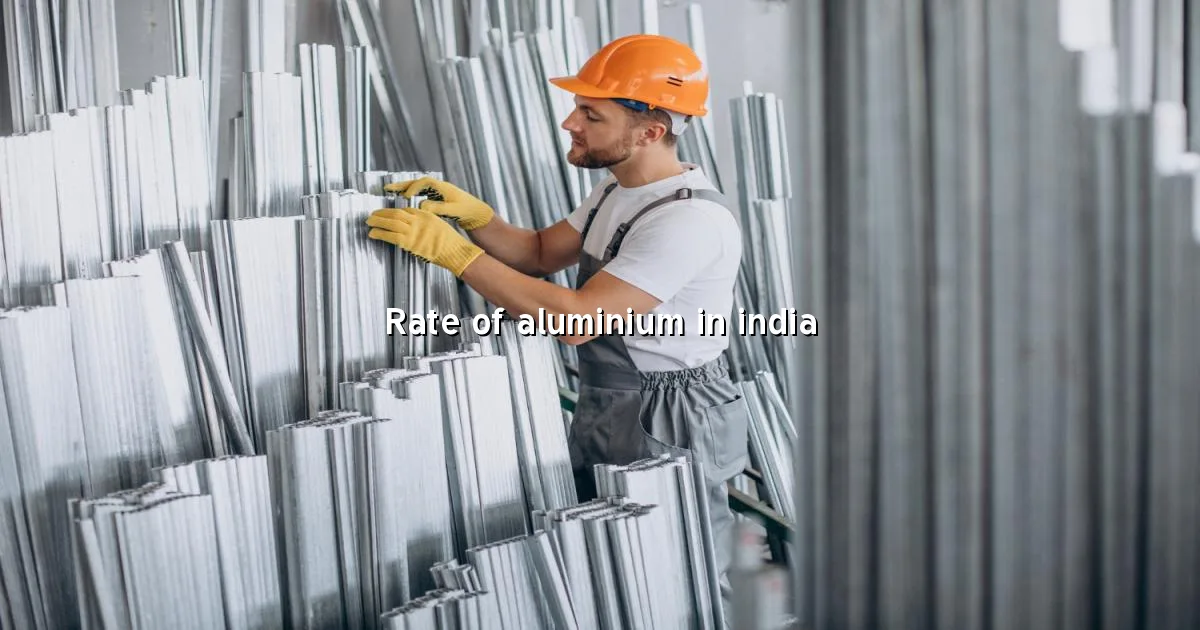
Still, converting the live rate into practical quantities makes the market easier to read. If you run a fabrication shop in Pune, source foil stock in Ahmedabad, or track base metals as a retail trader, these numbers are the ones you actually use. MCX gives the trading signal. LME gives the global benchmark. The Indian market settles somewhere in between, after currency and local costs do their work.
- 1 gram: ₹0.29
- 10 grams: ₹2.87
- 100 grams: ₹28.68
- 1 kg: ₹286.81
- 1 metric tonne: ₹286,811.00
Why this benchmark matters beyond the chart
Primary aluminium prices feed directly into aluminium ingot price negotiations, rolled product quotations and even some alloy conversion contracts. A window-frame extruder will not buy at the raw spot level, of course. Processing, wastage and alloying all add a margin. But the spot benchmark remains the base line. That is why even small buyers keep one eye on daily exchange moves. A sharp jump in LME aluminium overnight or a strong move in MCX aluminium by the afternoon session usually shows up very quickly in dealer quotes.
Rate of Aluminium in India by Gram, Kg and Tonne
Today's Aluminium rate is Less than One Rupees per gram. At this rate, 10 grams of Aluminium costs Three Rupees.
| Unit | Weight | Price (INR) | Price in Words |
|---|---|---|---|
| 1 Gram | 1.0000 g | ₹0.29 | Less than One Rupees |
| 8 Grams | 8.0000 g | ₹2.29 | Two Rupees |
| 10 Grams | 10.0000 g | ₹2.87 | Three Rupees |
| 100 Grams | 100.0000 g | ₹28.68 | Twenty Nine Rupees |
| 1 Kilogram | 1,000.0000 g | ₹286.81 | Two Hundred and Eighty Seven Rupees |
| 1 Ounce (oz) | 28.3495 g | ₹8.13 | Eight Rupees |
| 1 Troy Ounce | 31.1035 g | ₹8.92 | Nine Rupees |
| 1 Metric Ton | 1,000,000.0000 g | ₹286,811.00 | Two Lakh Eighty Six Thousand Eight Hundred and Eleven Rupees |
What drives the aluminium rate in the Indian market?
No single supplier sets the rate of aluminium in India. The market builds it layer by layer. The starting point is usually LME grade A aluminium, then comes the rupee-dollar conversion, then import costs, then domestic premiums, and finally the commercial reality of where the material is headed and in what form. An ingot quote is one thing. An aluminium sheet price for a specific thickness is another. Foil stock is different again.
From LME grade A to landed Indian price
India does have major domestic producers, but international pricing still matters because aluminium is a globally traded industrial metal. The LME contract acts as the world reference. MCX aluminium translates that into an Indian trading instrument in rupees. Then policy and logistics step in. A basic customs duty of roughly 7.5% on many imported forms of aluminium can widen the gap between overseas prices and domestic offers. Add GST, freight, warehouse charges and financing cost, and the aluminium spot price in India starts to look very different from a plain LME screen quote.
Currency is often the swing factor people underestimate. If LME aluminium is flat but USD/INR moves sharply, the local aluminium rate can still shift enough to change buying decisions. That happens more often than casual observers think. Traders on MCX watch this closely because a currency-led move can distort sentiment even when global metal fundamentals have not changed much.
Primary metal, scrap, alloys and fabricated premiums
There is also a clear split between primary aluminium and secondary aluminium. Primary aluminium is the cleaner benchmark product used for exchange-linked pricing and higher-purity industrial applications. Secondary aluminium, which comes from recycled scrap, usually trades cheaper. Sometimes much cheaper, depending on contamination, alloy mix and yield loss. That price gap matters if you are making cast parts, but far less if you need consistent conductivity or strict quality control for cables and precision extrusion.
Then come the alloy premiums. Common commercial grades such as 1100, 3003 or 6061 do not sell at the same price just because they all contain aluminium. Temper, chemistry and application decide the premium. Aluminium alloy sections used in transport or building systems usually price above plain ingot benchmarks. The same goes for aluminium sheet price in tight tolerances or aluminium foil price for packaging converters. Buying primary ingot costs more upfront than sourcing secondary feed — but if the job demands purity, formability or predictable mechanical properties, the cheaper option can become expensive very quickly.
Demand shifts add another layer. China produces around 60% of the world’s primary aluminium, so any change in Chinese smelter output, power restrictions or export flows tends to hit LME aluminium first and Indian rates soon after. Closer to home, infrastructure spending under India’s long-term construction pipeline supports demand for extrusions, facades, roofing systems and electrical conductors. Even food packaging plays a role. Rising use of foil in consumer goods has kept one slice of downstream demand surprisingly steady, even in slower industrial months.
Daily Rate of Aluminium in India — Last 10 Sessions
The most recent Aluminium price on record (2026-09-17) is Less than One Rupees per gram.
| Date | Price (INR/g) | Change |
|---|---|---|
| 2026-09-17 | ₹0.29 | +0.00 |
| 2026-09-16 | ₹0.29 | +0.00 |
| 2026-09-15 | ₹0.28 | +0.00 |
| 2026-09-14 | ₹0.28 | 0.00 |
| 2026-09-13 | ₹0.28 | +0.00 |
| 2026-09-12 | ₹0.28 | 0.00 |
| 2026-09-11 | ₹0.28 | 0.00 |
| 2026-09-10 | ₹0.29 | 0.00 |
| 2026-09-09 | ₹0.29 | +0.00 |
| 2026-09-08 | ₹0.29 | — |
How to read the aluminium market beyond today’s rate
Today’s quote is useful. It is not the whole story. Aluminium is a cyclical industrial commodity, and its trend often says more about manufacturing confidence than a single day’s move ever will. If the rate of aluminium in India rises over a few sessions, that may reflect stronger LME sentiment, tighter supply, higher power costs for smelters, or simply a currency adjustment. If it weakens over a month, buyers need to ask whether this is a short-term correction or a sign of softer downstream demand.
The cleanest way to track price discovery in India is to watch MCX aluminium futures alongside LME aluminium and the USD/INR rate. That three-part view explains most of the day-to-day action. Fabricators and distributors often go one step further and compare the exchange benchmark with actual dealer offers for ingot, billet, sheet or scrap. That spread tells you whether local supply is comfortable or tight. In some periods the exchange hardly moves, yet physical premiums in the market rise because stock is not available in the right grade or region. Anybody buying for production should care about that spread, not just the headline rate on a screen.
Seasonality and domestic supply matter more than people think
Aluminium demand in India does have patterns. Construction-linked consumption often improves before the heavy monsoon period, then slows when project execution gets messy on the ground. Packaging demand can firm up around festive production cycles. Cable and conductor buying can shift with power and infrastructure schedules. These are not rigid rules, but they do shape near-term procurement behaviour. A smart buyer does not just ask, “What is the aluminium price today India?” They ask whether the market is entering a stronger or weaker demand window.
Domestic supply also deserves attention. India is not a marginal player anymore. Producers such as Hindalco and Vedanta anchor a significant share of local smelting and downstream supply. That reduces outright import dependence in some product categories, but it does not isolate India from the world market. Power costs, coal availability, transport bottlenecks and export opportunities still influence what domestic buyers end up paying. Smelting is brutally energy intensive. If power economics turn unfavourable, the effect eventually reaches the aluminium bhav.
For investors, aluminium is a different animal from gold and silver. There is no sovereign bond route, no mainstream digital-metal SIP wrapper built around it, and no wide retail habit of buying it as a store of value. Exposure typically comes through MCX futures, commodity funds with some base-metal allocation, or indirectly through listed companies tied to aluminium production and fabrication. That makes this market more practical than sentimental. Builders, traders, converters, auto suppliers and industrial buyers drive it. Which, frankly, is why the price action often tells the truth faster than the headlines do.
If you are using this page for purchasing decisions, keep one eye on the 10-day history and another on the broader cycle. Short-term dips can help procurement timing. Longer uptrends usually signal stronger cost pressure across packaging, construction and transport manufacturing. Either way, the benchmark matters. It sets the tone for aluminium ingot price negotiations, scrap discounts, alloy premiums and stockist behaviour across the country.
Rate of Aluminium in India — FAQs for Buyers and Traders
The rate of aluminium in India today is ₹0.29 per gram as of September 17, 2026. That works out to about ₹286.81 per kg based on the live benchmark used on this page.
Indian aluminium pricing broadly tracks LME aluminium and MCX aluminium futures. The international price is converted into rupees using USD/INR, then domestic taxes, logistics and market premiums influence the local aluminium spot price.
At today\'s live rate, 1 kg aluminium costs ₹286.81. Fabricated products such as sheet, foil or alloy sections may trade above this benchmark because processing, thickness, alloy grade and freight all add cost.
MCX aluminium reflects exchange-traded primary metal benchmarks linked to LME grade A aluminium. Aluminium scrap price usually trades lower because it depends on contamination, alloy mix, recovery yield and local recycler demand.
Yes. Import costs matter. A basic customs duty of roughly 7.5% on many aluminium imports, along with GST and freight, can influence the landed cost and create a gap between overseas prices and domestic aluminium bhav.
Using today\'s rate of ₹0.29 per gram, one metric tonne comes to about ₹286,811.00. Large industrial contracts may settle differently depending on alloy, delivery terms and quantity.
