Quick Conversions
Aluminum MCX Price Trend — Last 10 Trading Days
All prices in ₹ per gram · daily rate, updated once per day
Aluminum MCX Price Today and What It Means on the Ground
The aluminum MCX price today stands at ₹0.29 per gram as of September 17, 2026. For most people, that figure becomes useful only when it is translated into buying terms: a trader thinks in lots, a fabricator thinks in kilograms, and a packaging buyer often thinks in tonnes. That is why MCX aluminium matters. It gives the market a common benchmark, one that tracks international LME aluminium closely enough to anchor negotiations in the Indian spot trade.

On screen, the move may look small. In real procurement, it is not. A change of a few paise per gram turns into a meaningful difference once you scale it to a tonne of primary aluminium ingot or sheet stock. MCX aluminium futures are the first thing many dealers, stockists and industrial buyers check in the morning, then they compare that with local premium, freight and GST before finalising an order.
- 1 gram: ₹0.29
- 10 grams: ₹2.86
- 100 grams: ₹28.58
- 1 kg: ₹285.79
- 1 metric tonne: ₹285,787.00
Why traders watch MCX before calling suppliers
Because it is clean price discovery. The aluminium spot price in India can vary by region, order size and material form, but MCX gives a transparent starting point. If LME aluminium firms overnight and the rupee weakens at the same time, Indian buyers usually feel that pressure quickly. The benchmark moves first. Stockyard quotes catch up after that.
If you are searching for aluminum mcx price, you are probably not looking for theory. You want to know whether the rate is higher than yesterday, whether it still makes sense to book material now, and how much the move adds to your landed cost per kg. This page is built around that exact question.
Aluminum MCX Price by Gram, Kg and Tonne
Today's Aluminium rate is Less than One Rupees per gram. At this rate, 10 grams of Aluminium costs Three Rupees.
| Unit | Weight | Price (INR) | Price in Words |
|---|---|---|---|
| 1 Gram | 1.0000 g | ₹0.29 | Less than One Rupees |
| 8 Grams | 8.0000 g | ₹2.29 | Two Rupees |
| 10 Grams | 10.0000 g | ₹2.86 | Three Rupees |
| 100 Grams | 100.0000 g | ₹28.58 | Twenty Nine Rupees |
| 1 Kilogram | 1,000.0000 g | ₹285.79 | Two Hundred and Eighty Six Rupees |
| 1 Ounce (oz) | 28.3495 g | ₹8.10 | Eight Rupees |
| 1 Troy Ounce | 31.1035 g | ₹8.89 | Nine Rupees |
| 1 Metric Ton | 1,000,000.0000 g | ₹285,787.00 | Two Lakh Eighty Five Thousand Seven Hundred and Eighty Seven Rupees |
How the MCX Aluminium Rate Is Formed in India
The Indian MCX rate does not appear from nowhere. It is built on the global benchmark for LME grade A aluminium, then filtered through the realities of the Indian market: currency, duty structure, logistics and local supply. That is the basic chain. Simple on paper, messier in practice.
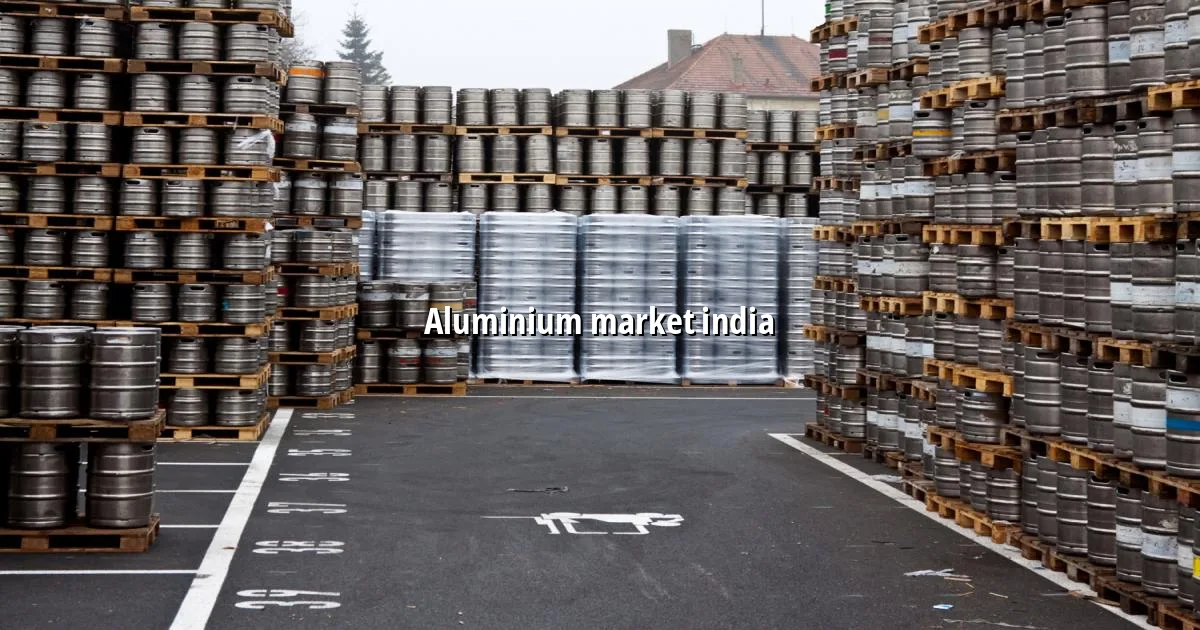
LME benchmark, rupee movement and import cost
LME aluminium is the global reference point. MCX aluminium futures translate that international value into rupees, and the USD/INR exchange rate becomes a major swing factor. Even if the dollar price is flat, a weaker rupee can push the domestic aluminium bhav higher. Import economics matter too. India also deals with basic customs duty, commonly cited around 7.5% for many aluminium products, and GST at the transaction stage. Buyers who ignore that gap between exchange price and delivered price usually end up surprised at invoice time.
Power cost is another big driver. Aluminium smelting is brutally energy-intensive, which is why changes in coal prices, electricity tariffs or curtailment risk can shift sentiment fast. One more thing: China remains the heavyweight here, producing roughly 60% of global primary aluminium output. If Chinese smelter production rises sharply, LME aluminium can soften. If power restrictions or output controls hit Chinese supply, prices can turn quickly. MCX follows that story almost in real time.
Primary aluminium, secondary metal and alloy premiums
Not every aluminium product in the market trades at the same value. Primary aluminium usually commands the benchmark-linked rate because of purity and consistency. Secondary aluminium, made from recycled scrap, often comes cheaper per kg, but only if your application can tolerate variation in chemistry. For electrical conductors or applications that need tighter quality control, that discount may not be worth chasing.
Then come alloy premiums. A plain benchmark may tell you the rough aluminium ingot price, but fabricated material is another matter. Aluminium sheet price, aluminium foil price and extrusion billet pricing depend on thickness, temper, conversion cost and grade. Common commercial grades such as 1100 series for general use or foil stock do not behave the same way as structural grades like 6061. Add machining, rolling or extrusion, and the gap from the base MCX rate widens fast. That is why a buyer should treat MCX as the foundation, not the final quote.
Demand also matters more than many people assume. Food packaging has steadily lifted aluminium foil consumption. Construction keeps pulling metal into facades, roofing, windows and partition systems. Automotive lightweighting adds another layer, especially as EV makers try to trim body weight without sacrificing rigidity. The benchmark rate responds to the global market; your actual purchase price responds to these sector-specific pulls on availability.
Aluminum MCX Price History — Recent Daily Closes
The most recent Aluminium price on record (2026-09-17) is Less than One Rupees per gram.
| Date | Price (INR/g) | Change |
|---|---|---|
| 2026-09-17 | ₹0.29 | +0.00 |
| 2026-09-16 | ₹0.29 | +0.00 |
| 2026-09-15 | ₹0.28 | +0.00 |
| 2026-09-14 | ₹0.28 | 0.00 |
| 2026-09-13 | ₹0.28 | +0.00 |
| 2026-09-12 | ₹0.28 | 0.00 |
| 2026-09-11 | ₹0.28 | 0.00 |
| 2026-09-10 | ₹0.29 | 0.00 |
| 2026-09-09 | ₹0.29 | +0.00 |
| 2026-09-08 | ₹0.29 | — |
Tracking Aluminum MCX Price for Trading, Hedging and Procurement
Aluminium is not a defensive metal. It is cyclical, industrial and deeply tied to growth expectations. That makes the aluminum MCX price especially useful for people who need to make timing decisions, whether they are trading a futures contract, hedging raw material exposure, or planning the next purchase cycle for a fabrication unit.
The first discipline is to separate benchmark movement from product premium. MCX aluminium futures tell you where the market thinks the base metal is trading. Your supplier quote tells you the delivered cost of a specific form: ingot, scrap, rolled coil, sheet, foil or alloy. The two are related, obviously, but they are not the same. A procurement manager who tracks both tends to buy better than one who only checks the final rate on WhatsApp groups.
There is also a timing pattern to watch. Construction-linked demand usually improves before peak summer project execution, then local activity can slow during the monsoon in many regions. Packaging demand often sees a different pulse, with festive-season consumption and food-sector stocking supporting aluminium foil and can demand. These shifts do not rewrite LME aluminium on their own, but they influence Indian spot premiums and inventory behaviour.
For market participants in India, MCX remains the practical price discovery venue. LME sets the global tone, but MCX aluminium futures are where domestic traders actually track the rupee-denominated move. If the spread between MCX and physical offers widens too much, it usually signals either local tightness, weak off-take, or a temporary mismatch in inventory and demand. That is valuable information. Sometimes more valuable than the headline price itself.
Longer term, India has solid reasons to stay relevant in aluminium. Domestic producers such as Hindalco and Vedanta give the country substantial primary metal capacity, even though some downstream categories and specialised products still depend on imports or imported pricing logic. Infrastructure spending under multi-year public capex plans, transmission expansion, rail upgrades and urban construction all support medium-term demand. None of that means the price only goes up. Far from it. Aluminium still swings with global manufacturing, Chinese output and macro sentiment. But it does mean the metal remains central to the industrial economy.
Retail investors sometimes compare aluminium with gold or silver and look for similar passive products. That comparison does not really hold. India has no mainstream sovereign-bond-style route or digital-metal retail wrapper for aluminium. If someone wants exposure, the usual path is through MCX futures, commodity-focused funds with industrial metals exposure, or equity positions in producers and downstream companies. For actual businesses, though, the point is less about investing and more about margin protection. Buy at the wrong level, and the cost passes straight through the balance sheet.
So the best use of this page is simple. Watch the daily move. Compare it with the recent trend. Check whether the benchmark is being driven by LME aluminium, the rupee, or local supply conditions. Then decide whether today is a booking day, a hedging day, or a day to wait. In base metals, that discipline usually matters more than trying to predict the absolute top or bottom.
Aluminum MCX Price FAQ for Indian Buyers and Traders
The aluminum MCX price in India today is ₹0.29 per gram as of September 17, 2026. That works out to roughly ₹285.79 per kg based on the live benchmark shown on this page.
MCX aluminium futures in India broadly track the international LME aluminium benchmark. The Indian rate reflects LME grade A aluminium, the USD/INR exchange rate, import costs and local market conditions, so MCX usually follows global direction with some basis difference.
At today\'s rate of ₹0.29 per gram, 1 metric tonne of aluminium is about ₹285,787.00. Industrial buyers usually compare this with landed import cost, local ingot premiums and GST impact before booking.
MCX aluminium is tied to the primary aluminium market, not mixed scrap. In practice, traders watch prices against LME grade A aluminium, which is a high-purity benchmark. Aluminium scrap price and secondary aluminium price can trade at a discount depending on alloy mix and contamination.
Daily moves usually come from shifts in LME aluminium, currency movement in USD/INR, energy costs for smelters, Chinese output data and changes in demand from construction, cable, transport and packaging. Even a small move in futures can matter for a fabricator buying several tonnes.
Yes. MCX is one of the cleanest benchmark references for checking the aluminium rate before negotiating with suppliers. Today\'s live benchmark of ₹0.29 per gram equals roughly ₹285.79 per kg, though final invoice prices for sheet, foil, extrusion or alloy can be higher.
