Small Metals, Enormous Leverage
Gallium, indium, neodymium and tellurium are "minor metals" — produced in relatively tiny tonnages compared with copper or aluminium, but critical to electronics, EV magnets and solar cells. Thin trading volume, outsized industrial and geopolitical importance.
Why China, Specifically
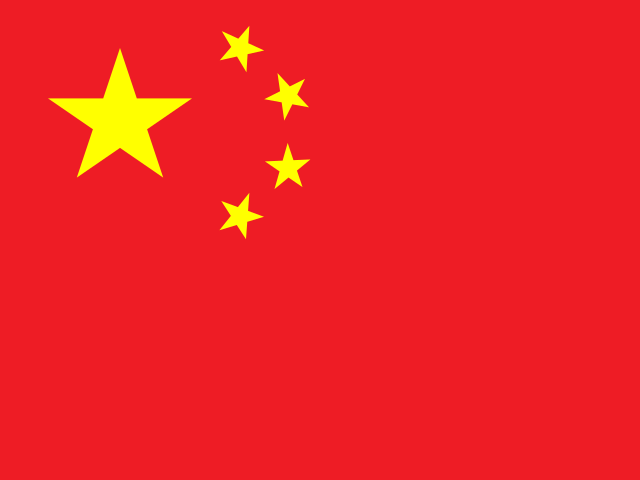
China dominates refining and production of most of these metals, from rare-earth processing to gallium and indium recovered as byproducts of zinc smelting. A China-based reporter sourcing quotes directly from domestic smelters and traders naturally became the most-watched reference for exactly these metals.
A Live Case Study in Resource Leverage
China's 2023 export licensing controls on gallium and germanium were a real, recent reminder that a "minor" metal most people have never heard of can suddenly become front-page geopolitical news — and Asian Metal's assessments are exactly where that story first shows up as a number.
Built From Relationships, Not a Screen
The methodology here is more manual than a modern futures exchange — analysts calling and surveying producers and traders directly for actual deal prices, rather than an anonymous electronic order book. For metals traded this thinly, that's often the only way to get a usable price at all.
Contracts & Products Traded
Asian Metal publishes no contracts either — its product is a dense set of daily price series covering gallium, indium, neodymium, tellurium and dozens of related minor and rare-earth materials, broken out by purity, form (ingot, oxide, various grades) and location. There's no electronic feed behind the numbers; analysts source them the old way, calling and surveying Chinese smelters and traders directly for real deal prices, since volumes are far too thin and fragmented for an anonymous order book to produce a reliable number. That relationship-based methodology, more than any product design choice, is what actually distinguishes Asian Metal from an exchange.
Role in Global Price Discovery
Electronics manufacturers, solar panel makers and rare-earth magnet producers reference Asian Metal's assessments directly when buying gallium, indium, neodymium and tellurium, particularly material sourced from or priced off China, which dominates refining of most of these metals. Governments and Western buyers tracking critical-mineral supply risk watch the same numbers closely, since China's export-licensing decisions — as in 2023 — move these prices faster than almost anything on the exchange side of this list. In the 24-hour relay, Asian Metal effectively covers the China leg for critical minerals that never trade on SHFE, SGE or any exchange here at all.
Neodymium — the "Nd" in NdFeB magnets — is what makes both wind turbines and electric motors possible at their current size and efficiency, and almost none of it is exchange-traded anywhere in the world.
Sources
- Asian Metal is Beijing-based, founded in the early 2000s — About Asian Metal (2024)
- China's 2023 export licensing controls on gallium and germanium — China imposes new export controls on two minerals critical to semiconductor manufacture (2023)