Quick Conversions
Gold Coin Rate — 10-Day Trend
All prices in ₹ per gram · daily rate, updated once per day
Gold Coin Rate in India Today
The gold coin rate in India is ₹15,288.77 per gram for 24K gold as of September 17, 2026. That is the clean spot reference, not the sticker price you see at a counter. A shop will usually add premium, packaging, and GST before you walk out with the coin.
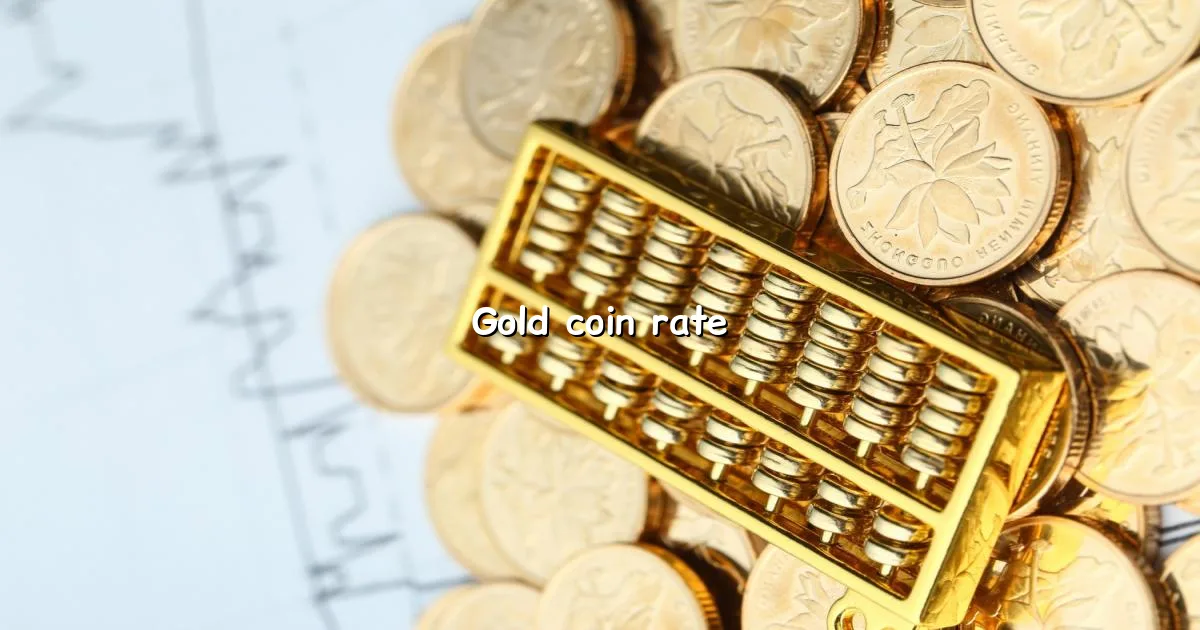
Coins are sold in fixed denominations rather than random weights. The sizes you will actually find on a bank counter or refiner's site are 0.5g, 1g, 5g, 8g, 10g, 20g and 50g — with 1g, 8g and 10g the ones most people search for around Dhanteras and gifting season. At today's rate, an 8 gram 24K coin works out to about ₹122,310.13 and a 10 gram coin to ₹152,887.66 on a pure-metal basis — before the mint's premium, packaging, and GST are added.
Almost all investment-grade coins in India are struck in 24K (999 or 999.9 fineness), not 22K or 18K — coins are priced purely for their gold content, so there is no reason to alloy them down the way jewellery is.
Contact UsGold Coin Rate by Weight
Today's Gold rate is Fifteen Thousand Two Hundred and Eighty Nine Rupees per gram. At this rate, 10 grams of Gold costs One Lakh Fifty Two Thousand Eight Hundred and Eighty Eight Rupees.
| Unit | Weight | Price (INR) | Price in Words |
|---|---|---|---|
| 1 Gram | 1.0000 g | ₹15,288.77 | Fifteen Thousand Two Hundred and Eighty Nine Rupees |
| 8 Grams | 8.0000 g | ₹122,310.13 | One Lakh Twenty Two Thousand Three Hundred and Ten Rupees |
| 10 Grams | 10.0000 g | ₹152,887.66 | One Lakh Fifty Two Thousand Eight Hundred and Eighty Eight Rupees |
| 100 Grams | 100.0000 g | ₹1,528,876.63 | Fifteen Lakh Twenty Eight Thousand Eight Hundred and Seventy Seven Rupees |
| 1 Kilogram | 1,000.0000 g | ₹15,288,766.26 | One Crore Fifty Two Lakh Eighty Eight Thousand Seven Hundred and Sixty Six Rupees |
| 1 Ounce (oz) | 28.3495 g | ₹433,428.88 | Four Lakh Thirty Three Thousand Four Hundred and Twenty Nine Rupees |
| 1 Troy Ounce | 31.1035 g | ₹475,534.14 | Four Lakh Seventy Five Thousand Five Hundred and Thirty Four Rupees |
| 1 Metric Ton | 1,000,000.0000 g | ₹15,288,766,260.00 | One Thousand Five Hundred and Twenty Eight Crore Eighty Seven Lakh Sixty Six Thousand Two Hundred and Sixty Rupees |
Why Gold Coin Price Differs from Jewellery Rates
People often compare a coin with a chain or bangle and assume the gap is small. It is not. A plain 24K coin usually carries a lower premium than jewellery because there are no design charges, no labour-heavy finishing, and no stone setting to absorb into the bill. That is one reason gold coin rate searches spike around Diwali, Akshaya Tritiya, and wedding season.
Mint marks, certification and what actually protects you
A coin is only worth the metal it certifiably contains, so three things matter more than the display card: the purity stamp (999 or 999.9 for 24K), the mint or refiner's mark, and the assay certificate that comes sealed with it. Coins from BIS-recognised refiners such as MMTC-PAMP, or coins sold by nationalised banks, come in tamper-evident packaging with a certificate number you can trace back to the mint. If that seal is broken or missing, or the certificate number doesn't match the coin, treat it as a problem, not a formality.
The gap between a coin's price and a bar or chain's price is mostly this certification and the smaller unit size — a 1g or 8g coin carries a proportionally higher minting cost per gram than a 100g bar, which is one reason coin premiums over spot are usually higher than bullion-bar premiums (see our dedicated gold bullion price page for the bar/biscuit side of this). Once you own the coin, its resale value depends on that same certification staying intact — an opened, unsealed coin typically fetches a slightly thinner resale price than one still sealed.
Ask About Buying Gold CoinsGold Coin Rate — 10-Day History
The most recent Gold price on record (2026-09-17) is Fifteen Thousand Two Hundred and Eighty Nine Rupees per gram. This is up by Fifty Nine Rupees from the previous day's rate of ₹15,230.10.
| Date | Price (INR/g) | Change |
|---|---|---|
| 2026-09-17 | ₹15,288.77 | +58.66 |
| 2026-09-16 | ₹15,230.10 | +162.03 |
| 2026-09-15 | ₹15,068.07 | +36.63 |
| 2026-09-14 | ₹15,031.44 | -268.97 |
| 2026-09-13 | ₹15,300.41 | 0.00 |
| 2026-09-12 | ₹15,300.41 | -46.74 |
| 2026-09-11 | ₹15,347.15 | +66.38 |
| 2026-09-10 | ₹15,280.77 | -141.47 |
| 2026-09-09 | ₹15,422.24 | +121.11 |
| 2026-09-08 | ₹15,301.14 | — |
Gold Coin Rate as an Investment Signal
A coin is not just a gift item in India. For many families, it is the first clean form of gold ownership because it avoids making charges and keeps resale friction low. That is why a steady gold coin rate matters to small savers, not only to jewellers or traders watching MCX screens.
If you want exposure without storing physical metal, gold ETFs and digital gold give you a different route. They track the market price more neatly than most retail coins, though the convenience comes with platform risk and, in the case of ETFs, broker or fund expenses. Sovereign Gold Bond is a different animal altogether. It pays 2.5% annual interest, has a lock-in, and trades on exchange at market price, so it behaves like an investment instrument rather than a piece of metal in your locker.
Seasonal buying still shapes the market more than many people admit. Dhanteras lifts coin demand. Wedding shopping keeps the retail shelf busy. And when the rupee weakens, Indian coin prices can climb even if dollar gold moves sideways. That is the reality of pricing in a market tied to global bullion, import duty, and local sentiment all at once. If you are tracking the 52-week range, this is the kind of context that keeps a simple price number from being misleading.
Get Help on Gold InvestingGold Coin Rate — Frequently Asked Questions
The gold coin rate in India today is ₹15,288.77 per gram for 24K gold as of September 17, 2026. That is the metal-value benchmark; the price a mint or bank actually charges for a packaged coin runs above this because of minting premium, tamper-evident packaging, and GST.
Indian retailers and banks commonly sell coins in 0.5g, 1g, 5g, 8g, 10g, 20g and 50g sizes, with 1g, 8g and 10g being the most searched-for gifting sizes. The 10 gram gold coin price today works out to approximately ₹152,887.66 on a pure-metal basis, before the mint's premium is added.
The 22K gold coin rate today works out to about ₹14,014.70 per gram, calculated as 22/24 of the 24K rate. Most investment-grade coins, though, are minted in 24K (999 or 999.9 purity) rather than 22K, because coins are priced for their metal content, not designed for daily wear.
MCX gold futures track market expectations and hedging flows, while a retail coin price includes manufacturing premium, packaging, distribution cost, and GST. The MCX rate is useful for direction, but the shop bill is a different story.
Look for three things on the packaging or the coin itself: a purity stamp (999 or 999.9 for 24K), the mint's hallmark or brand mark (from BIS-recognised refiners such as MMTC-PAMP or a bank-issued coin), and a tamper-evident seal with a matching assay/purity certificate. A genuine coin's invoice states the exact weight and purity — mismatches there are the first red flag.
For pure investment, coins are cleaner than jewellery because you avoid making charges and wastage. A coin's price tracks close to spot plus a modest, disclosed premium. Jewellery makes sense if you want to wear it; a coin makes more sense if the goal is simply to hold gold value.
