Quick Conversions
24K Gold Rate — 10-Day Trend
All prices in ₹ per gram · daily rate, updated once per day
24K Gold Rate in India Today
24K gold is 999 fineness — 99.9% pure, as close to pure elemental gold as retail products get. Today's rate is ₹15,301.86 per gram as of September 23, 2026. Every other karat page on this site — 22K, 18K, 14K and the rest — starts its own price from this number and adjusts for how much gold is actually in the alloy.
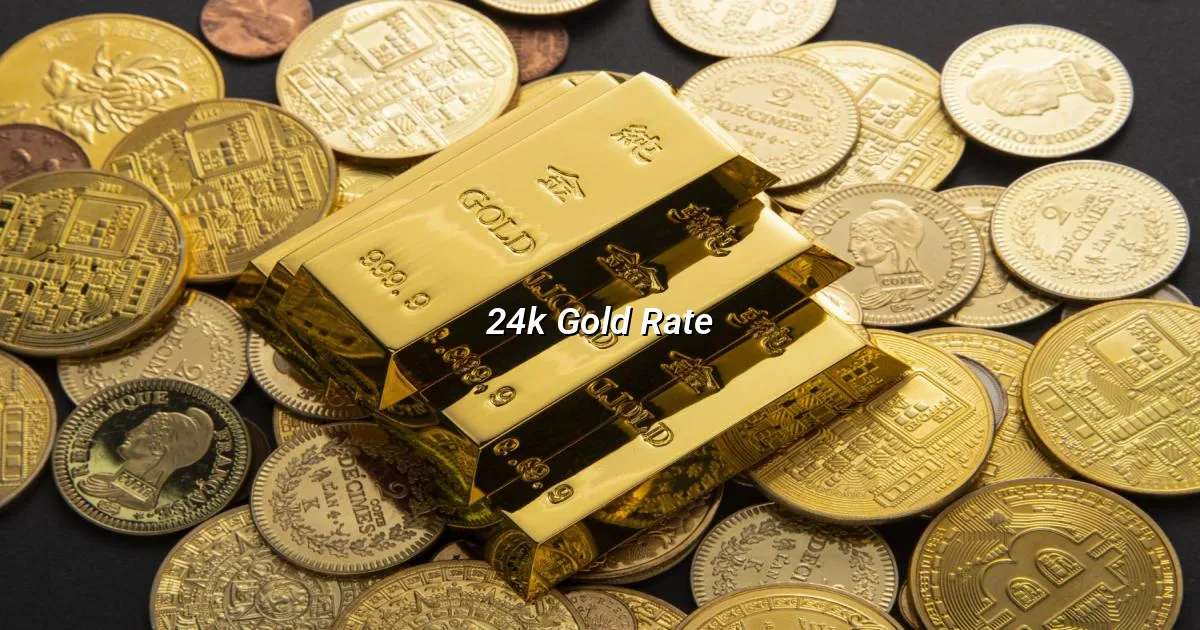
- 24K gold price per gram: ₹15,301.86
- 24K gold price for 10 grams: ₹153,018.64
- 24K gold price for 100 grams: ₹1,530,186.41
- 24K gold price for 1 kilogram: ₹15,301,864.06
Coins and bars track this figure almost directly, since there's no alloy to price around. Jewellery does not — see our GST on gold page for what gets added to a retail bill.
24K Gold Rate by Weight
Today's Gold rate is Fifteen Thousand Three Hundred and Two Rupees per gram. At this rate, 10 grams of Gold costs One Lakh Fifty Three Thousand Nineteen Rupees.
| Unit | Weight | Price (INR) | Price in Words |
|---|---|---|---|
| 1 Gram | 1.0000 g | ₹15,301.86 | Fifteen Thousand Three Hundred and Two Rupees |
| 8 Grams | 8.0000 g | ₹122,414.91 | One Lakh Twenty Two Thousand Four Hundred and Fifteen Rupees |
| 10 Grams | 10.0000 g | ₹153,018.64 | One Lakh Fifty Three Thousand Nineteen Rupees |
| 100 Grams | 100.0000 g | ₹1,530,186.41 | Fifteen Lakh Thirty Thousand One Hundred and Eighty Six Rupees |
| 1 Kilogram | 1,000.0000 g | ₹15,301,864.06 | One Crore Fifty Three Lakh One Thousand Eight Hundred and Sixty Four Rupees |
| 1 Ounce (oz) | 28.3495 g | ₹433,800.20 | Four Lakh Thirty Three Thousand Eight Hundred Rupees |
| 1 Troy Ounce | 31.1035 g | ₹475,941.53 | Four Lakh Seventy Five Thousand Nine Hundred and Forty Two Rupees |
| 1 Metric Ton | 1,000,000.0000 g | ₹15,301,864,056.00 | One Thousand Five Hundred and Thirty Crore Eighteen Lakh Sixty Four Thousand Fifty Six Rupees |
Why 24K Is Too Soft to Wear Every Day
Pure gold is a genuinely soft metal — soft enough that a 24K ring picks up dents and scratches from ordinary daily wear that a 22K or 18K piece would shrug off. That's not a manufacturing flaw; it's what 99.9% gold physically is. Every lower karat exists specifically to fix this: alloying in copper, silver, zinc or palladium trades away some gold content for the hardness a piece needs to survive being worn, gripped, or set with a stone. 18K is hard enough to hold a diamond securely. 24K isn't hard enough to hold its own shape under daily wear.
Why buyers choose 24K anyway
For coins and bars, softness is irrelevant — nothing needs to survive being worn. What matters instead is that the buyer is paying for gold content and nothing else: no alloy, no design labour, no wastage margin. That's precisely why Indian mints and bullion dealers sell investment gold at 999 or 9999 fineness, stamped and assay-certified, rather than at a jewellery purity. It's the cleanest way to hold the metal itself.
24K Gold Rate — Last 10 Days
The most recent Gold price on record (2026-09-23) is Fifteen Thousand Three Hundred and Two Rupees per gram. This is up by Thirty Three Rupees from the previous day's rate of ₹15,268.44.
| Date | Price (INR/g) | Change |
|---|---|---|
| 2026-09-23 | ₹15,301.86 | +33.43 |
| 2026-09-22 | ₹15,268.44 | -139.76 |
| 2026-09-21 | ₹15,408.20 | -41.46 |
| 2026-09-20 | ₹15,449.66 | 0.00 |
| 2026-09-19 | ₹15,449.66 | +59.17 |
| 2026-09-18 | ₹15,390.50 | +65.29 |
| 2026-09-17 | ₹15,325.20 | +95.10 |
| 2026-09-16 | ₹15,230.10 | +162.03 |
| 2026-09-15 | ₹15,068.07 | +36.63 |
| 2026-09-14 | ₹15,031.44 | — |
24K Gold as an Investment Reference
Physical 24K coins and bars give direct ownership, but bring locker cost, a making charge even on coins, and a buy-sell spread. Gold ETFs and digital gold track this same 999 benchmark without the storage overhead. Sovereign Gold Bonds are a different structure again — they pay 2.5% annual interest on top of the gold-linked value, with a lock-in period that trades away instant liquidity for that extra return.
Whichever route you take, the reference point is the same: this 24K rate, not a jewellery showroom's alloy-adjusted quote. That's the one thing that makes 24K genuinely different from every other page on this site — it's the number the market actually trades, not a derived estimate.
24K Gold Rate Questions Answered
The 24K gold rate today in India is ₹15,301.86 per gram as of September 23, 2026. This is 999 fineness — 99.9% pure gold, the benchmark every other karat on this site is calculated from.
The 10 gram 24K gold price today is ₹153,018.64. Investment coins and bars are usually priced off this per-gram figure directly, since there's no alloy to adjust for.
At 99.9% purity, 24K has almost no hardening alloy left in it — gold on its own is a genuinely soft metal, and a 24K ring or bangle scratches and deforms far more easily than a 22K or 18K piece under normal daily wear. That softness is exactly why jewellery uses lower purities and coins/bars stay at 24K, where nothing needs to survive being worn.
24K gold is pure gold, while 22K contains other metals for strength. Today’s 22K reference rate is ₹14,026.71 per gram, which is lower because the gold content is 22/24 of the pure rate.
Coins, bars and other investment-grade products, almost exclusively. Retail investment gold in India — from mint-issued coins to bank-sold bars — is sold at 999 or 9999 fineness specifically because buyers want the metal value, not a wearable design, and don't need any alloy hardness.
Making charges, wastage and GST sit on top of the metal value — see our GST on gold page for the exact breakdown.
